






Professional Permit to Work Forms for Enhanced Site Safety
We speak to health and safety managers every single day who understand that controlling high-risk activities is the absolute bedrock of site safety. Our extensive range of Permit to Work forms are meticulously designed to help your organisation manage hazardous tasks, ensuring that all necessary precautions are verified before any work commences. We know that robust documentation isn't just about ticking a box for compliance; it's about safeguarding your team, your contractors, and your business's operational integrity.
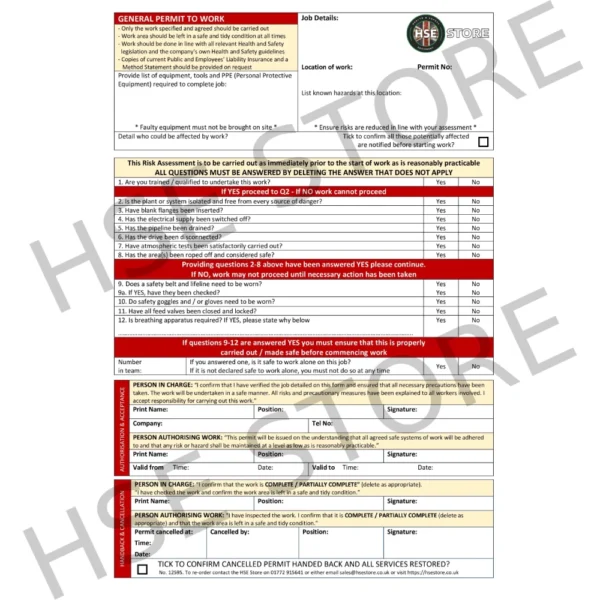
Every single product in our permit to work range is supplied as a high-quality, A4 NCR (No Carbon Required) triplicate pad containing 50 forms. This triplicate system is an absolute must-have for hazardous site safety. It allows you to instantly retain a master copy in the health and safety office, display one at the point of work, and provide a direct copy to the contractor or operative. It guarantees seamless communication and undeniable traceability across your entire site.
Mitigate Fire and Fall Risks with Hot Works and Working at Height Permits
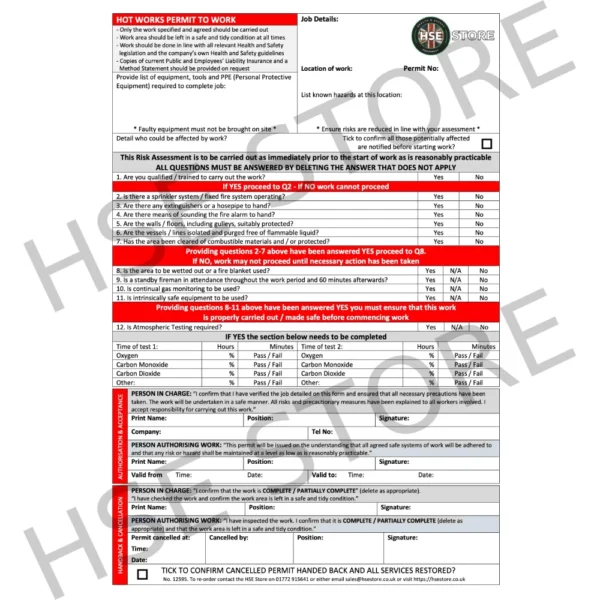
Two of the most frequently requested documents by our facilities management and construction clients are our Hot Works Permit to Work forms and our Working at Height Permit to Work forms. Hot works, encompassing welding, grinding, and soldering, present a severe fire risk if not strictly monitored. Our hot works forms guide the issuer through essential, life-saving checks—such as ensuring fire extinguishers are on hand, combustible materials are cleared, and a continuous fire watch is established—preventing catastrophic incidents on site.
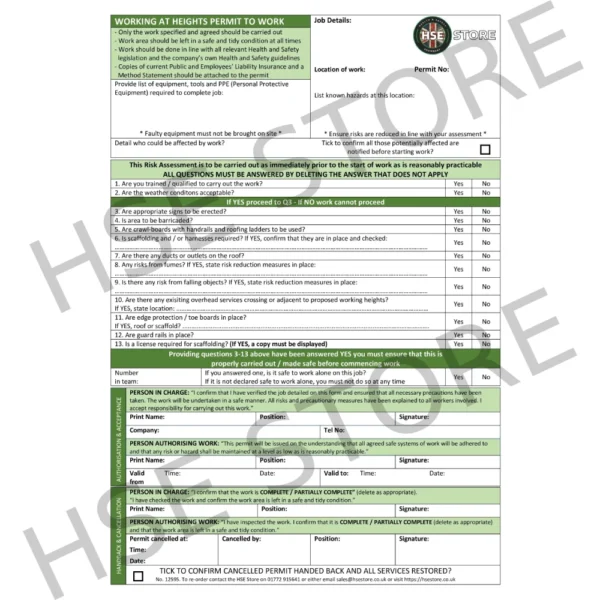
Similarly, falls from height remain one of the leading causes of workplace injuries and fatalities in the UK. By implementing our working at height permits, site managers can rigorously assess whether the correct access equipment is being utilised and that operators are wearing appropriate, inspected harness systems. These forms prompt crucial safety dialogue between the permit issuer and the operative, ensuring all control measures are firmly in place before anyone leaves the ground.
Navigating Complex Environments: Confined Spaces and Electrical Permits
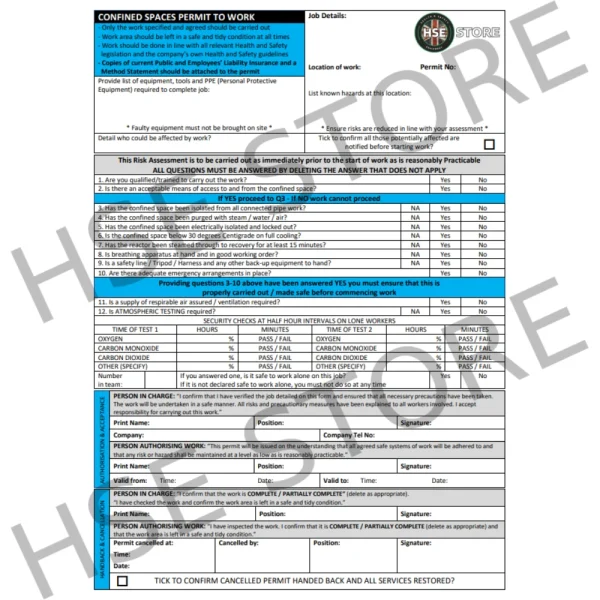
Working in restricted areas requires airtight procedures, which is why our Confined Spaces Permit to Work forms are an indispensable asset for your safety management toolkit. Confined spaces pose hidden, lethal dangers, including toxic gas build-ups and rapid oxygen depletion. Our specially designed forms ensure that atmospheric testing, emergency rescue plans, and isolation protocols are thoroughly documented and verified by a competent person prior to entry.
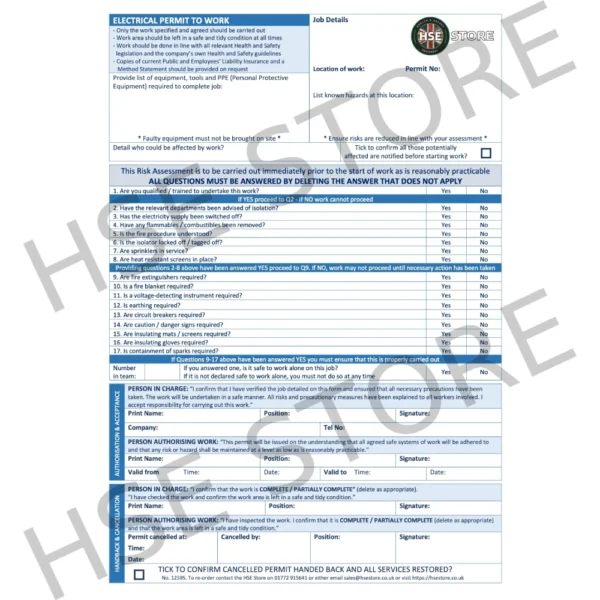
Equally critical to your site's safety architecture are our Electrical Permit to Work forms. When operatives are working on or near live circuits, the margin for error is exactly zero. These forms strictly enforce your 'lock out, tag out' (LOTO) procedures, confirming that systems are dead, isolated, and safe to work on. As an HSE Store expert, I always advise our clients that formalising electrical isolations with our specific NCR pads is one of the most effective ways to prevent accidental re-energisation.
Specialist Forms for Excavation, Asbestos, and Hazardous Substances
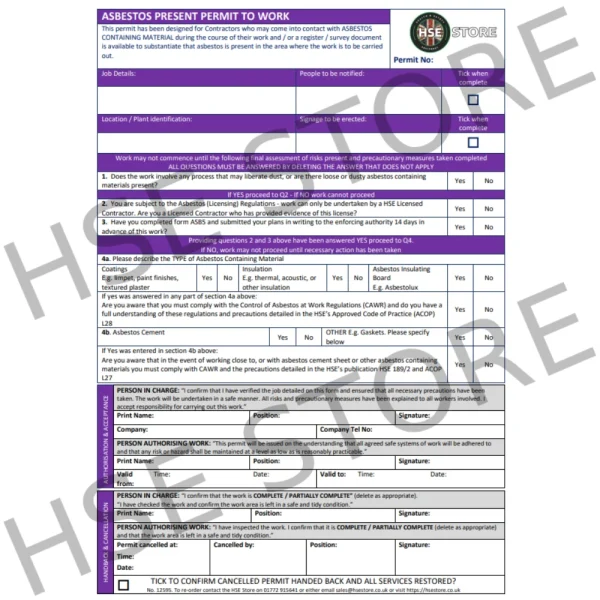
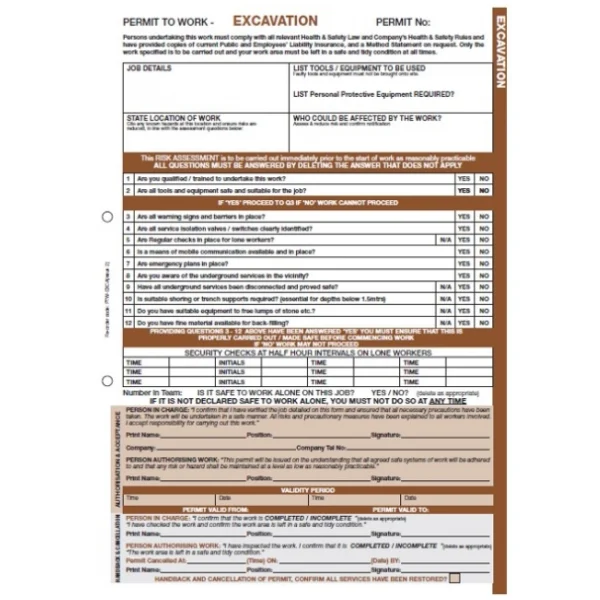
Groundworks and facility refurbishments often unearth unexpected dangers, which is why we supply dedicated Excavation Permit to Work forms alongside our highly requested Asbestos Permit to Work forms. Before any digging begins, an excavation permit ensures that underground services, such as gas lines and high-voltage cables, have been accurately mapped and bypassed. Meanwhile, asbestos remains a severe occupational health hazard; our asbestos permits strictly control access to areas where asbestos-containing materials (ACMs) are present or being removed, ensuring only trained professionals with the correct PPE are permitted to proceed.
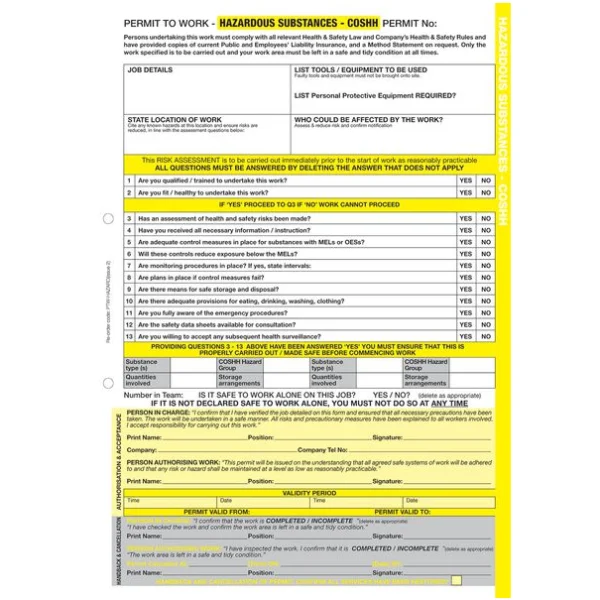
For environments handling dangerous chemicals, our Hazardous Substances Permit to Work forms provide the necessary oversight. These forms align seamlessly with your COSHH assessments, ensuring that exposure limits, ventilation requirements, and emergency decontamination procedures are clearly understood by the workforce. By utilising these highly specific forms, you are demonstrating a premium standard of duty of care to both staff and auditors.
Ensuring Compliance in Engineering: Lifting Equipment, Breaking Lines, and Pressure Testing
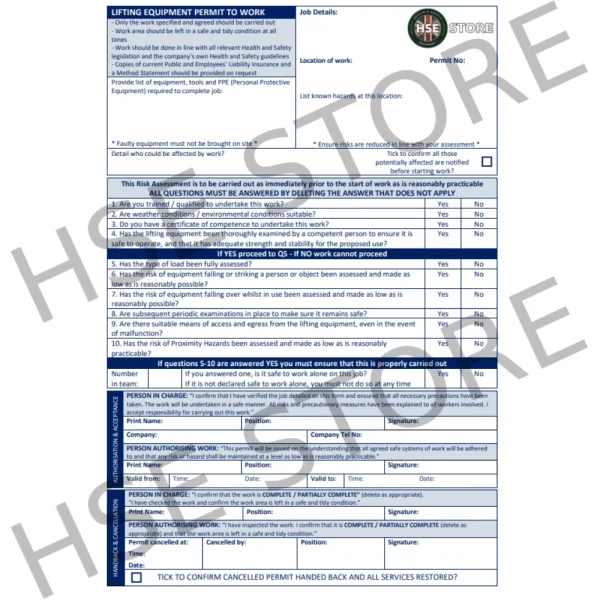
Heavy engineering and mechanical maintenance require heavily tailored safety protocols. Our Lifting Equipment Permit to Work forms are vital for authorising complex lifting operations. They ensure that cranes, hoists, and slings have been inspected, and that safe working loads (SWL) are never exceeded, effectively coordinating the lifting team to eliminate the risk of dropped loads.
For process and manufacturing industries, our Breaking Lines Permit to Work forms and Pressure Testing Permit to Work forms are absolute necessities. Breaking into pipework that may contain hazardous liquids or gases under pressure can lead to severe blow-outs or chemical spills. These forms ensure that lines are properly depressurised, drained, and isolated. Similarly, our pressure testing forms guarantee that exclusion zones are established and system limits are double-checked before introducing high-pressure air or water.
Complete Coverage with Window Cleaning and General Permit to Work Forms
Facilities management encompasses a broad spectrum of tasks, and window cleaning—especially on commercial high-rises—often involves a combination of height, water, and varied weather conditions. Our Window Cleaning Permit to Work forms provide a bespoke checklist to ensure safe working loads on cradles, appropriate weather conditions, and secure anchor points are all confirmed before work starts.
Finally, for those bespoke or unique tasks that don't neatly fit into a specific hazard category, we offer our versatile General Permit to Work forms. These pads are perfect for low-to-medium risk operations that still require formal authorisation and tracking. They maintain the same high-quality A4 NCR format, allowing site managers to adapt the permit system to almost any ad-hoc maintenance task, ensuring your site remains 100% compliant and controlled at all times.
Frequently Asked Questions (FAQs)
1. What is a Permit to Work form?
A Permit to Work form is a formal, documented safety control system used to manage high-risk activities on site. It ensures that all hazards have been assessed, control measures are in place, and the work is officially authorised by a competent person before it begins.
2. Why do your permit forms come in an NCR triplicate pad?
Our A4 NCR (No Carbon Required) triplicate pads allow you to create three identical copies of the permit in a single writing process. This means you can keep a master copy in the site office, hand one to the operative, and display the third at the specific work location, ensuring full traceability without the mess of carbon paper.
3. How many forms are included in a single pad?
Every single one of our permit to work pads contains 50 individual forms. This provides excellent value for money and ensures you have a sufficient, lasting supply for ongoing maintenance and contractor work.
4. Do I need a specific permit for different types of hazardous work?
Yes, it is highly recommended. While we do offer General Permit to Work forms, using task-specific forms—such as Hot Works, Confined Spaces, or Asbestos permits—ensures that the unique risks and safety checks associated with those specific jobs are thoroughly addressed.
5. Are these forms compliant with UK health and safety regulations?
Absolutely. As a leading UK supplier, HSE Store designs all our permit to work systems to help you comply with the stringent requirements set out by the Health and Safety Executive (HSE), supporting your wider risk assessments and safety policies.
6. Can these forms be used by external contractors as well as internal staff?
Yes. In fact, our permit forms are essential for managing external contractors. They provide a clear, contractual agreement that the worker understands the site rules, the specific hazards, and the safety measures required for the task.
7. How long should a Permit to Work be valid for?
A permit should only be valid for a specified, limited duration—typically a single shift or up to 24 hours. Our forms include clear sections to stipulate the exact start and expiry times, ensuring that work does not continue unchecked into another shift.
8. Do you offer bulk discounts or free delivery on Permit to Work pads?
Yes! At HSE Store, we offer free standard UK delivery on all orders over £50 (Ex. VAT). Because each pad is £50, simply adding two or more pads will automatically qualify your order for enhanced discount as well as free delivery!