-
Equipment Inspections – Daily Checklist Kits
£124.00 Ex. VAT Select options This product has multiple variants. The options may be chosen on the product page -
Equipment Inspections – Weekly Checklist Kits
£40.00 Ex. VAT Select options This product has multiple variants. The options may be chosen on the product page


What forklift truck inspections are required?
Treat the checks as three separate layers. Mixing them up is how fleets fail an audit.
The operator check happens at the beginning of each shift, against the truck handbook. HSE’s rider-operated lift truck guidance expects defects that affect safe use to be reported and the truck taken out of service. PUWER underpins that duty: the truck is work equipment and must stay in an efficient state.
LOLER applies because a forklift is used for lifting. A thorough examination must be carried out by a competent person at the statutory interval, or at the interval in a written examination scheme. For a standard counterbalance or reach truck used to lift goods, that is normally at least every 12 months. If the truck is used to lift people — an order picker, or a truck fitted with a working platform — the default interval is six months. Fork arms and other lifting accessories are commonly examined on a six-month cycle of their own.
A CFTS or equivalent thorough examination report is not a stack of daily sheets, and a completed Good to Go book is not a Report of Thorough Examination. Keep both.
What should a forklift truck pre-use check cover?
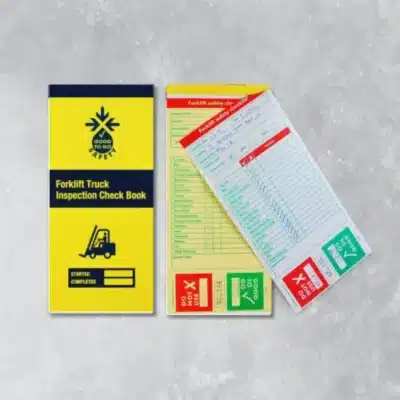
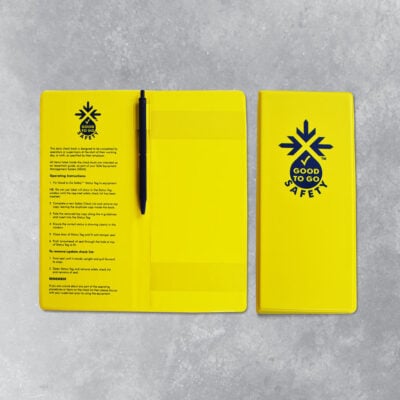
The check is a walk-round plus a short function test before the truck takes a load. The Forklift Inspection Books are written for that routine. The product listing covers the mast, forks, carriage plate, hydraulics, tyres and safety controls.
In a warehouse or yard that usually means looking at:
- Forks, locking pins and carriage for wear, cracks and correct seating
- Mast channels, chains, rollers and any obvious slack or damage
- Hydraulic leaks on rams, hoses and the tilt function
- Tyres or wheels, including pressure and chunking on cushion tyres
- Lights, horn, reversing alarm and other warning devices
- Seat, restraint, overhead guard and controls before moving off
If anything would make the lift or the travel unsafe, park it, mark the tag do not use, and tell the supervisor. Do not leave a verbal note on the next driver’s seat.
Attachments change the check. A rotating head, clamp or jib is extra equipment. Use the printed forklift book only where it still matches the machine; the blank Create Your Own book is there when it does not.
How the Good to Go inspection system works
The tag sits where the next driver puts a hand on the cab. That is the point of the system.
- The operator completes the forklift checklist at the start of the shift.
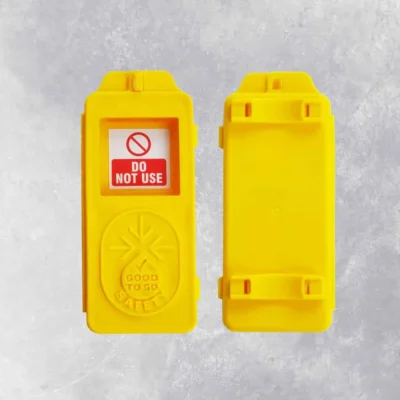
- The top copy goes into the status tag so the truck shows as good to go or do not use, with the date visible.
- The carbon copy stays in the book as the fleet record.
- An anti-tamper seal closes the tag so the sheet cannot be swapped without it showing.
- Failed trucks stay locked off until the fault is cleared and a new check is done.
Daily kits are sized for a weekday-shift regime over a year. Weekly kits suit a recorded weekly inspection where that is what the competent person has set. Neither kit is the annual or six-monthly thorough examination.
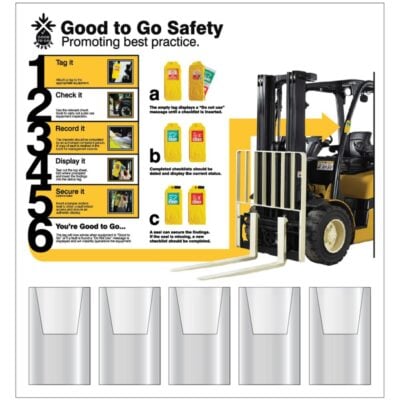
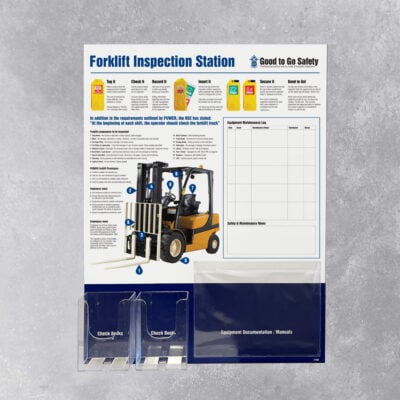
On multi-shift sites the Forklift Inspection and Maintenance Station gives one wall a home for spare books, permits and a dry-wipe fault list so the night shift is not hunting through a drawer.
Choose the right forklift truck inspection products
Use the forklift-printed items for the truck itself. Shared hardware is the same as the rest of the Good to Go range.
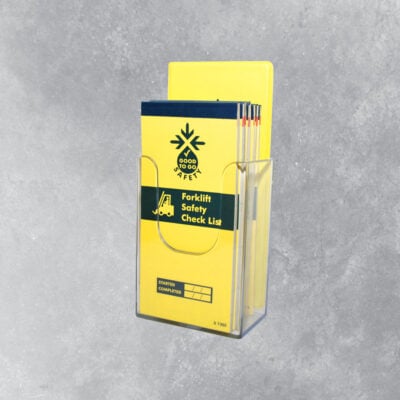
- Forklift Inspection Books – 25 Checklists — pocket book for daily or weekly pre-use checks, with carbon copies.
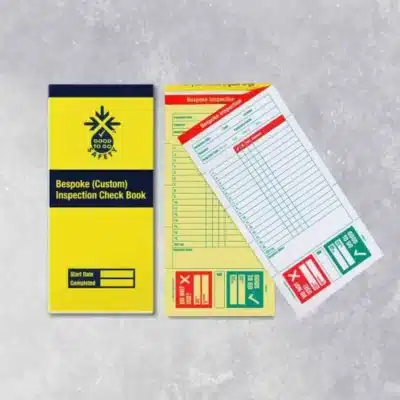
- Create Your Own Inspection Books – 25 Checklists — blank sheets for a house checklist or a truck that the standard FLT list does not cover.
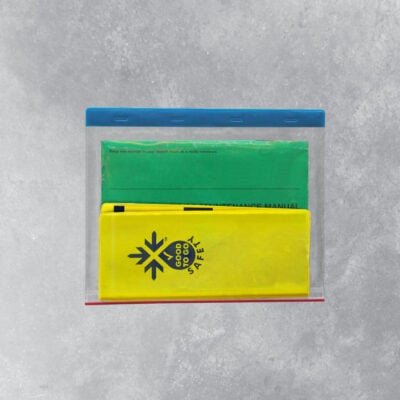
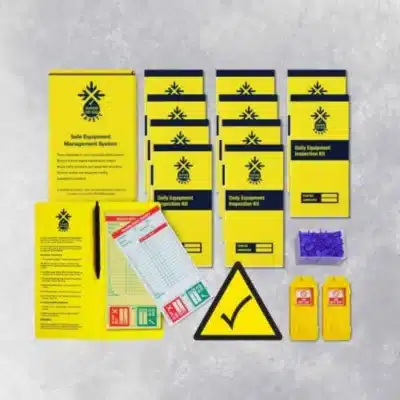
- Equipment Inspections – Daily Checklist Kits — select the forklift option. Checklists, status tags, seals, wallet and pen for start-of-shift recording.
- Equipment Inspections – Weekly Checklist Kits — forklift option where the recorded inspection is weekly rather than every shift.
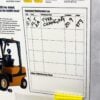
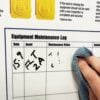
- Forklift Inspection and Maintenance Station — 600 × 800 mm board with two dispensers (up to 20 books), an A4 wallet, Good to Go system guidance and dry-wipe panels for faults and messages.
- Inspection Information Station — larger central board if the same wall also holds other equipment books.
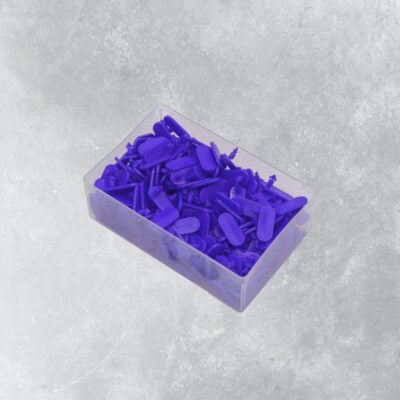
- Good To Go Safety Status Tag and Anti-Tamper Seals (Pack of 100) — cab-side status and replacements.
- Weather Resistant Inspection Holder, Check Book Wallet & Pen and Equipment Inspection Book Dispenser — keep the current book in the cab or on the charge-bay wall.
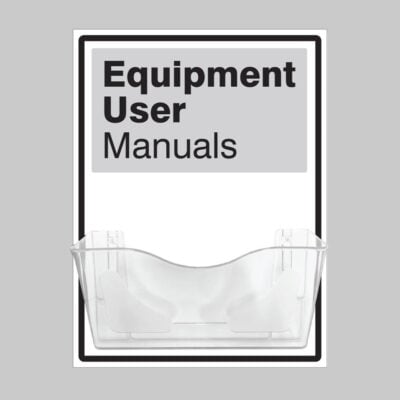
- Equipment User Manuals – Document Holder — for the handbook that the pre-use check should follow.
- Forklift Inspection Checklist – A2 Safety Poster — wipe-clean reminder of the daily points.
A truck used with a man-riding platform belongs with the forklift work platform products as well as this page. A powered pallet truck has its own book.
Who these products are for
They are for the people who have to show yesterday’s sheet, not only last year’s examination certificate:
- Counterbalance, reach and warehouse truck operators doing the start-of-shift check
- Shift supervisors collecting books at handover
- Warehouse, manufacturing and logistics managers running mixed FLT fleets
- Plant hire desks issuing trucks with a consistent check method
- Facilities teams with one or two trucks in a yard or stores
If the same site also runs telehandlers, pallet trucks or trucks with working platforms, keep each type on its own checklist so the questions match the machine.
Forklift truck inspection FAQs
Is a daily check the same as a LOLER thorough examination?
No. The daily or start-of-shift check is the operator’s look at the truck. A thorough examination is a detailed inspection by a competent person, usually every 12 months for a goods-only truck, with a written report.
How often should the operator fill in the book?
At the start of each shift the truck is used, unless your competent person has set a different recorded interval. Follow the manufacturer’s handbook as well.
Does a working platform on the forks change the rules?
Yes. Equipment used to lift people has a six-month default thorough examination interval. Use the forklift work platform inspection products for that attachment and do not treat it as a standard FLT check.
What if the operator finds a fault mid-shift?
Stop the truck, change the tag to do not use, seal it, and report the defect. Do not pass it to the next driver with a warning.
Do I still need CFTS or an equivalent examination?
Yes, if that is how you meet LOLER. These books record the site checks between examinations. They do not replace the competent person’s report.
Can I use the forklift book on a telehandler or pallet truck?
No. Use the matching equipment book. The status tag and seals can be shared; the checklist should not.
Free UK mainland delivery on orders over £50. Trade discounts and bespoke options are available for fleet packs or a different checklist layout.