
-
Equipment Inspections – Daily Checklist Kits
£124.00 Ex. VAT Select options This product has multiple variants. The options may be chosen on the product page -
Equipment Inspections – Weekly Checklist Kits
£40.00 Ex. VAT Select options This product has multiple variants. The options may be chosen on the product page










What front loader inspections are required?
A wheeled loader, loading shovel or front-end loader is work equipment under PUWER. It must be suitable for the task, maintained in an efficient state, and inspected where deterioration could create danger. That is a pre-use check by the operator, further inspection at intervals set by risk assessment and the manufacturer, and a maintenance record for the machine.
Visibility is part of suitability. Fitting a larger bucket, a different attachment or extra guarding can cut the view ahead and to the sides. PUWER expects the combination to remain suitable; if forward vision is reduced, mirrors, cameras and site controls have to match the risk to pedestrians. A damaged visibility aid is a reason to stop the machine, not a note for later.
LOLER applies only when the loader is used for lifting operations — a suspended load on forks, a hook or similar — not for ordinary bucket work. A goods-only loading shovel does not pick up a 12-month thorough examination simply because it raises a pile of aggregate. If you do lift, treat the lifting arrangement separately and keep the pre-use book as well.
These products record the site checks. They are not a manufacturer service and they are not a LOLER report.
What should a front loader pre-use check cover?
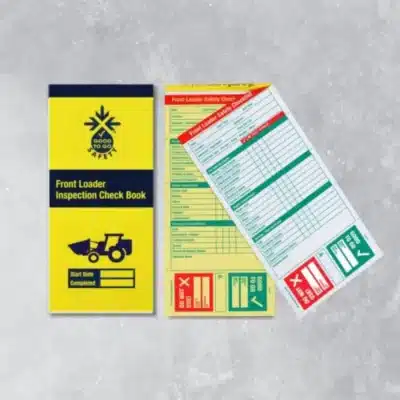
Do the walk-round before the engine works the pile. The Front Loader Inspection Books are written for that pre-shift routine. The product listing covers wheels and tyres, bucket attachments and linkage pins, and is aimed at catching hydraulic leaks, linkage wear and brake faults early.
On a quarry, waste site or yard that usually means:
- Tyres, wheels and obvious structural damage around the loader arms
- Bucket, cutting edge, pins and any quick-hitch or attachment lock
- Hydraulic rams and hoses on the lift and tilt circuit
- Mirrors, cameras and other visibility aids — do not work the machine if they are missing or broken
- Brakes, steering, lights and warning devices before moving off
Manufacturer guidance for this equipment type also points to an end-of-shift look, so defects found during the day are written down rather than left for the next driver. If the loader is not safe to use, the tag must say so before anyone else climbs in.
How the Good to Go inspection system works
The tag sits at the cab opening. The next operator should see yesterday’s result before they sit down.
- Complete the front loader checklist at the start of the shift.
- Put the top copy in the status tag so the machine shows as good to go or do not use.
- Leave the carbon copy in the book as the plant record.
- Seal the tag so the sheet cannot be swapped without it showing.
- After a defect or an attachment change, complete a new sheet. An oversized bucket is a different machine until it has been checked.
Daily kits follow a weekday pre-start regime. Weekly kits suit a recorded weekly inspection where that is what the competent person has set. Holders and the inspection station keep books readable in a dusty yard.
Choose the right front loader inspection products
The printed items for this machine are the book and the poster. The rest is shared Good to Go hardware.
- Front Loader Inspection Books – 25 Checklists — pocket book for pre-shift checks on front loaders, with carbon copies.
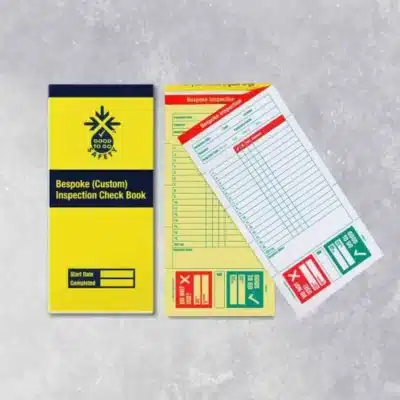
- Create Your Own Inspection Books – 25 Checklists — blank sheets if the house list or an unusual attachment is not covered.
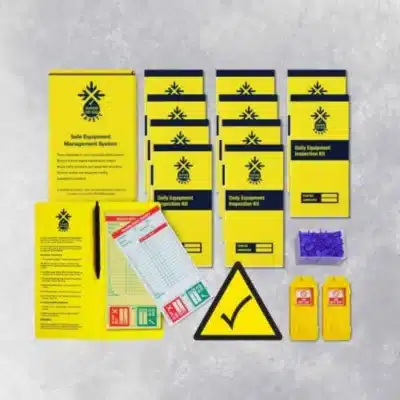
- Equipment Inspections – Daily Checklist Kits — select the front loader option. Checklists, tags, seals, wallet and pen.
- Equipment Inspections – Weekly Checklist Kits — front loader option for a weekly recorded inspection.
- Good To Go Safety Status Tag and Anti-Tamper Seals (Pack of 100) — cab-side status and replacements.
- Weather Resistant Inspection Holder, Check Book Wallet & Pen and Equipment Inspection Book Dispenser — keep the current book in the cab or the plant office.
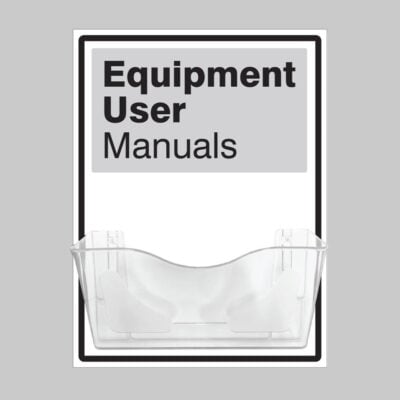
- Inspection Information Station and Equipment User Manuals – Document Holder — wall storage when several loaders share a compound.
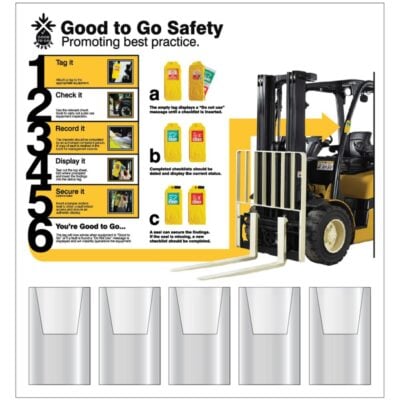
- Front Loader Inspection Checklist – A2 Safety Poster — wipe-clean reminder of the daily points.
A telehandler, excavator, tractor or lorry-mounted loader crane has its own book. The status tag can be shared; the checklist should not.
Who these products are for
They are for people running loading shovels, not office plant lists:
- Operators of wheeled loaders and shovel loaders on construction, quarry, waste and yard work
- Plant supervisors collecting books at the end of a shift
- Waste and recycling sites where visibility and pedestrians are the main risk
- Plant hire desks issuing a loader with a consistent check method
- Facilities teams with a single loading shovel in a compound or transfer station
If the same fleet includes dumpers or excavators, keep each type on its own Good to Go book.
Front loader inspection FAQs
Does a front loader need a LOLER thorough examination?
Only if it is used for lifting operations. Ordinary bucket work sits under PUWER. Forks, a hook or a suspended load change that.
How often should the operator fill in the book?
Before the machine is used each shift is the usual pattern. Some sites also record a shutdown check. Follow the manufacturer’s maintenance intervals as well.
What if a larger bucket has been fitted?
Treat suitability as a new question. Check pins, hydraulics and visibility before work. If forward vision is worse, extra aids and site controls are part of the duty, not optional extras.
Can I use the excavator or telehandler book on a loading shovel?
No. Use the front loader book. Different machines fail in different places.
Where should the status tag go?
At the cab entry, where the next driver will see it before they start the engine.
Do these products replace servicing?
No. They record the operator checks between services. Repair, scheduled maintenance and any lifting examination still have to be done by the right people.
Free UK mainland delivery on orders over £50. Trade discounts and bespoke options are available for fleet packs or a different checklist layout.