
-
Equipment Inspections – Daily Checklist Kits
£124.00 Ex. VAT Select options This product has multiple variants. The options may be chosen on the product page -
Equipment Inspections – Weekly Checklist Kits
£40.00 Ex. VAT Select options This product has multiple variants. The options may be chosen on the product page












What ladder inspections are required?
A ladder is work equipment under PUWER and access equipment under the Work at Height Regulations. It must be suitable for the job, maintained in a safe condition, and inspected where deterioration could cause a fall.
HSE’s practical test is simple. The ladder should have no visible defects. The user checks it at the start of the working day, and again if it has been dropped or moved from dirty ground onto a clean floor — the feet pick up soil and then slip. The employer also keeps an up-to-date record of detailed visual inspections, done regularly by a competent person, following the manufacturer’s instructions.
There is no single statutory number of weeks in the Regulations. Frequency follows use, storage and the maker’s guidance. A ladder that is part of a scaffold is inspected on the scaffold’s seven-day cycle as well.
EN 131 is the product standard for many workplace ladders. It tells you what the ladder was built to, not how often to inspect it. These books record the site checks. They do not certify that a ladder is EN 131, and they do not decide whether a ladder is the right access method for the task.
What should a ladder pre-use check cover?
Do the check before the ladder goes against the wall. HSE lists stiles, feet, rungs, locking mechanisms, and on a stepladder the platform and treads.
The Ladder Inspection Books cover ladders and stepladders. The product listing walks through:
- Rungs, stiles, platforms and handrails for dents, warp, cracks or fatigue
- Locking bars, fixings, ropes and pulleys
- Anti-slip feet and any castors
Look along each stile. Missing or flattened feet are a common reason a ladder walks. On an extension ladder, confirm the locks are fully engaged before anyone climbs. On a stepladder, check the platform is not split and the treads are clean enough to stand on.
If anything is wrong, the ladder stays on the rack with the tag set to do not use. Do not tape a rung or wire a foot back on.
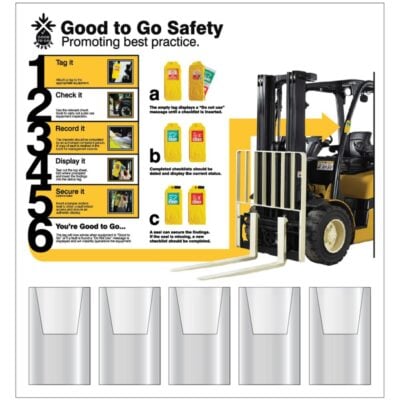
How the Good to Go inspection system works
The tag sits at eye level on the stile, near where the user takes hold.
- Complete the ladder checklist — user for the daily look, competent person for the recorded detailed inspection.
- Put the top copy in the status tag so the ladder shows as good to go or do not use.
- Leave the carbon copy in the book as the register entry.
- Seal the tag so last month’s sheet cannot be left in.
- After a drop, a repair or a change of site, check again. Dirty feet on a clean floor are a new check, not yesterday’s.
Daily kits suit a recorded check each working day. Weekly kits suit a recorded weekly inspection. HSE does not require every pre-use look to be written down; the detailed inspection does need a record. Use the book for the layer you have decided to document.
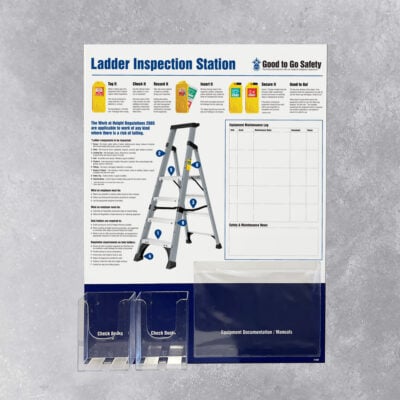
The Ladder Inspection and Maintenance Station gives the ladder store a wall for spare books, manuals and a dry-wipe fault list so withdrawn ladders are not mixed back into the serviceable rack.
Choose the right ladder inspection products
The printed items for this equipment are the book and the poster. There is also a dedicated ladder station. The rest is shared Good to Go hardware.
- Ladder Inspection Books – 25 Checklists — carbon-copy sheets for ladders and stepladders.
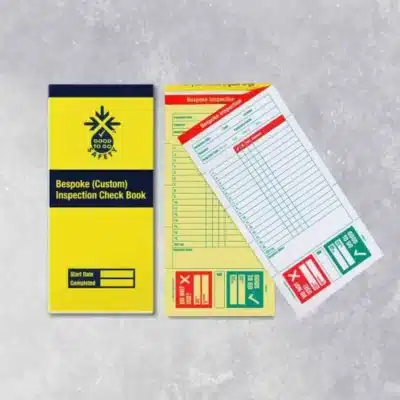
- Create Your Own Inspection Books – 25 Checklists — blank books if a house form or an unusual combination ladder is not covered.
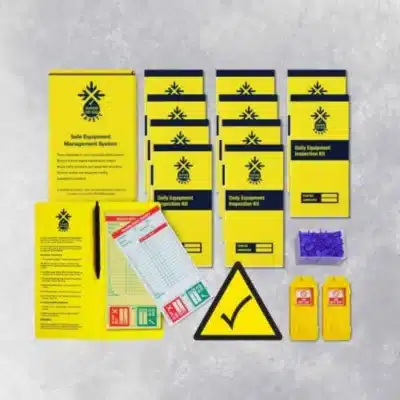
- Equipment Inspections – Daily Checklist Kits — choose the ladder option. Checklists, tags, seals, wallet and pen.
- Equipment Inspections – Weekly Checklist Kits — ladder option for a weekly recorded inspection.
- Ladder Inspection and Maintenance Station — wall board with two dispensers (up to 20 books), an A4 wallet, Good to Go system guidance and dry-wipe panels. Books are not included.
- Inspection Information Station — larger central board if the same wall also holds other equipment books.
- Good To Go Safety Status Tag and Anti-Tamper Seals (Pack of 100) — stile or storage-point status.
- Weather Resistant Inspection Holder, Check Book Wallet & Pen and Equipment Inspection Book Dispenser — keep the current book with the rack.
- Equipment User Manuals – Document Holder — for the manufacturer instructions the pre-use check should follow.
- Ladder Inspection Checklist – A2 Safety Poster — wipe-clean reminder of the daily points.
Podiums, scaffold towers and fixed scaffolding have their own books. A ladder clipped into a scaffold is inspected with that scaffold.
Who these products are for
They are for people who still issue portable ladders and have to show they are checked:
- Facilities and maintenance teams with a ladder rack in a plant room or warehouse
- Contractors using leaning ladders or stepladders for short tasks
- Site supervisors collecting books from a mixed access store
- Hire desks issuing ladders with a consistent check method
- Safety managers keeping a ladder register between detailed inspections
If the same store holds towers or podium steps, keep those on their own Good to Go books.
Ladder inspection FAQs
Does every pre-use check have to be written down?
HSE says the user check does not normally need a record. The detailed visual inspection by a competent person does. Many sites still record the daily look so the tag on the stile matches the book.
How often is the detailed inspection?
At planned intervals, following the manufacturer and a competent person’s assessment of how the ladder is used and stored. Ladders on a scaffold follow the seven-day scaffold inspection as well.
Who should carry out the check?
The user does the pre-use look. A competent person does the recorded detailed inspection.
Can I use this book on a podium or a tower?
No. Use the podium step or scaffold tower book. The tag hardware can be shared.
Where should the status tag go?
On the stile at a grip point, or on the storage rack, where the next user will see it before they carry the ladder away.
Does a completed book prove the ladder is EN 131?
No. EN 131 is how the ladder was made. The book records the condition check.
Free UK mainland delivery on orders over £50. Trade discounts and bespoke options are available for rack packs or a different checklist layout.