-
Equipment Inspections – Daily Checklist Kits
£124.00 Ex. VAT Select options This product has multiple variants. The options may be chosen on the product page -
Equipment Inspections – Weekly Checklist Kits
£40.00 Ex. VAT Select options This product has multiple variants. The options may be chosen on the product page






What dumper truck inspections are required?
A site dumper is work equipment. PUWER 1998 requires it to be suitable, maintained in an efficient state and inspected where deterioration could create danger. HSE and industry guidance for dumpers treats a daily pre-use check by a trained operator as the baseline, with further inspections and servicing set by risk assessment and the manufacturer’s schedule.
That pre-use check is not the same as a workshop service, and it is not a LOLER thorough examination. Standard forward-tipping site dumpers are controlled under PUWER. LOLER only becomes relevant if the machine is used as lifting equipment. Do not treat an annual plant inspection as a substitute for the walk-round at the start of each shift.
Records matter because dumpers are involved in a high share of construction transport incidents. Overturns, failed brakes, unmarked defects after hire-in, and operators starting a machine that another shift already knew was faulty are recurring patterns. A dated checklist and a visible status tag close that gap: the person about to drive can see whether the machine was cleared, and the office keeps the carbon copy.
Inspect again after anything that could have changed the condition of the machine — a roll or heavy impact, skip or ROPS damage, hydraulic failure, a move between sites, or a return from hire. Frequency of formal in-service inspection should follow your risk assessment and the conditions the fleet actually works in. Mud, quarry haul roads and constant tipping usually mean a tighter regime than occasional yard use.
What should a dumper truck pre-use check cover?
The Good to Go dumper truck book is written around site-dumper mechanics rather than a generic vehicle sheet. A competent operator should work a consistent route around the machine with the engine off first, then complete the functional checks from the seat.
Typical coverage includes:
- Structure and operator protection — ROPS/FOPS condition, seat and seat belt, mirrors, access steps and handholds
- Running gear — tyres, wheels, nuts, obvious leaks beneath the machine
- Steering, brakes and drive — including park brake and response on a short, controlled movement where site rules allow
- Hydraulics and tipping gear — hoses, rams, pins, skip/body condition, tailgate or lock where fitted
- Engine compartment — fluids, belts, obvious damage or leakage
- Electrics and warnings — lights, beacon, horn and reversing alarm
- Visibility and controls — wipers, glass, gauges and that controls return cleanly
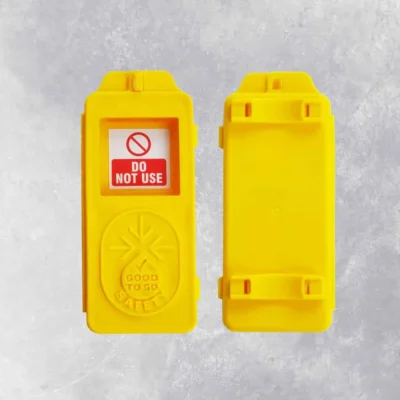
If a defect affects safe operation, the machine is taken out of service. The top copy goes in the status tag; the duplicate stays in the book. A “Do Not Use” indication on the tag is the instruction to the next operator, not a note to be negotiated on the haul road.
A pre-use check will not pick up every internal fault. It is there to catch the defects that kill or stop plant on the day: flat or cut tyres, weeping hydraulics, a damaged ROPS, a belt that will not latch, lights or alarms that have failed, a skip that will not sit or tip correctly.
How the Good to Go inspection system works
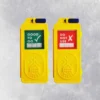
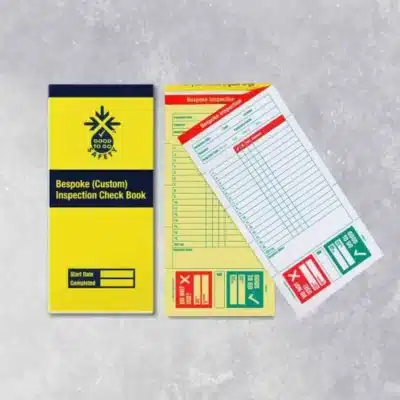
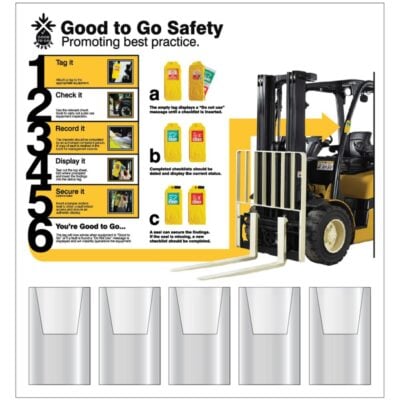
Good to Go is a physical status system, not a software login. The operator completes the dumper checklist in the book. The top sheet is placed in the weatherproof status tag on the machine and secured with an anti-tamper seal. The carbon copy remains bound in the book for the office, insurer or principal contractor.
A completed, in-date sheet in the tag reads as cleared for use. An empty tag, a broken seal or a failed check reads as do not use. That is the point of the yellow tag on a busy plant compound: the decision does not depend on who last had the keys.
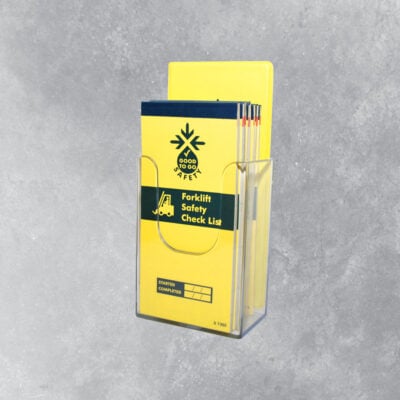
Around the book and tag sit the site hardware listed on this page: a weather-resistant holder, a wallet and pen for the cab or welfare unit, a book dispenser where several machines are booked out, anti-tamper seals in packs of 100, an inspection information station for the compound, and a document holder for the manufacturer’s manual and any in-service reports. None of that replaces competence. It makes the check visible and the record hard to lose in the rain.
Choose the right dumper truck inspection products
Start with the dedicated item, then add the hardware the site will actually keep on the machine.
Dumper Truck Inspection Books – 25 Checklists are the core product. Each book is carbonless, numbered in use as part of the Good to Go method, and written for dumper trucks / site dumpers — hydraulics, tipping mechanism, steering, engine fluids and ROPS/FOPS among the prompt points. Use one book per machine if you want a clean audit trail; share only where the booking system can still show which dumper was checked.
The Dumper Truck Inspection Checklist A2 Safety Poster is the wall or cabin reminder. It is printed on wipe-clean synthetic paper for indoor or outdoor mounting and is there so the walk-round sequence is the same for hired-in operators as for your own.
Good To Go Safety Status Tags, the weather-resistant inspection holder and Anti-Tamper Seals (Pack of 100) are what make the check visible on the machine. Without the tag and seal, the book is only a pad in someone’s pocket.
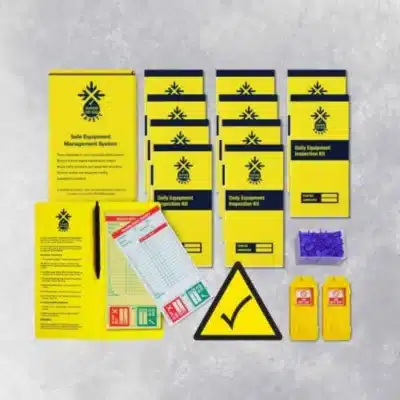
Daily Checklist Kits and Weekly Checklist Kits are the bundled Good to Go format — books, tags, seals, wallet and pen — used across the equipment inspections range. Select them when you are standardising several plant types on one method, not because they are a dumper-only SKU. Confirm the book type inside the kit on the product page before you order against a dumper fleet.
Create Your Own Inspection Books cover non-standard body variants or mixed plant that does not match the pre-printed dumper sheet. The Equipment Inspection Book Dispenser, Inspection Information Station and Equipment User Manuals Document Holder belong in the plant yard or hire desk, not on every skip.
Who these products are for
These products are for people who issue, operate or receive site dumpers and have to prove the machine was checked.
That includes principal contractors and site managers on civils and housebuilding, quarry and aggregates supervisors, groundworks and plant-hire desks sending machines across multiple sites, and facilities or estates teams running a small dumper on a campus or industrial yard. They are also used by supervisors who inherit hired-in plant for a few weeks and still need a record that will stand up if something goes wrong.
They are not a substitute for operator training, familiarisation on that model, or the manufacturer’s maintenance schedule. A completed book does not make an untrained driver competent, and it does not repair a cracked ROPS.
Dumper truck inspection FAQs
How often should a site dumper be checked?
Do a recorded pre-use check at the start of each shift, or before a new operator takes the machine. Set any further inspection interval by risk assessment, site conditions and the manufacturer’s instructions.
Does PUWER apply to dumper trucks?
Yes. Site dumpers are work equipment. PUWER requires them to be suitable, maintained and, where deterioration could cause danger, inspected, with results recorded.
Is a dumper subject to LOLER?
Not as a standard site dumper used to carry and tip material. LOLER applies if the machine is used as lifting equipment. Keep PUWER pre-use checks and any LOLER duties separate.
What does the dumper inspection book include?
25 carbonless checklists written for dumper trucks / site dumpers, with prompts covering items such as hydraulics, engine fluids, tipping gear, steering and ROPS/FOPS. The top copy is for the status tag; the duplicate stays in the book.
What if the dumper fails the check?
Do not use it. Record the defect, change the tag to a clear do-not-use state, and keep the machine isolated until a competent person has rectified the fault and a fresh check is completed.
Can hired-in dumpers use the same system?
Yes. Fit a Good to Go tag on arrival, complete a check before first use on your site, and keep the book copies with the hire record. Do not rely on a previous user’s undocumented “it was fine yesterday.”