-
Equipment Inspections – Daily Checklist Kits
£124.00 Ex. VAT Select options This product has multiple variants. The options may be chosen on the product page -
Equipment Inspections – Weekly Checklist Kits
£40.00 Ex. VAT Select options This product has multiple variants. The options may be chosen on the product page



What trailer inspections are required?
A trailer used for work is work equipment under PUWER. It must be suitable for the load and the towing vehicle, maintained in a safe condition, and inspected where wear on the hitch, brakes or running gear could cause a runaway or a lost load.
If the trailer also goes on the public road, the Road Vehicles (Construction and Use) Regulations require it to be maintained so it is not a danger. That is a separate duty from the workplace pre-use check. These books do not replace an MOT, a plating examination or a DVSA roadside expectation — they record the site walk-round before the trailer moves.
HSE workplace transport guidance treats coupling as a high-risk task: parking brakes on, hitch locked, services connected, then a walk-round. Frequency of recorded checks follows how hard the trailer is used. Daily plant movements usually mean a check each time it is hitched; a trailer that sits for a week still needs looking at before it rolls.
What should a trailer pre-use check cover?
Check the trailer before it is coupled, then confirm the combination after it is on the ball or eye.
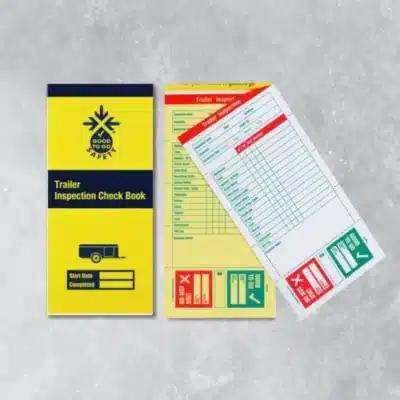
The Trailer Inspection Books are written for commercial and industrial trailers. The product listing covers:
- Hitch head, safety chains and breakaway cable
- Tyre pressure and tread, floor and chassis
- 7/13-pin plug, lights and reflectors
- Lashing points and load distribution
Look at the jockey wheel and the handbrake. Confirm the coupling closes and locks on the vehicle it will actually tow. A warehouse cage trailer may not have road lights; a plant low-loader will. If the printed list does not match the trailer in front of you, use Create Your Own rather than skipping the hitch.
Do not treat the tractor’s sheet as a trailer inspection. The failure is usually on the drawbar.
How the Good to Go inspection system works
The tag sits at the hitch or on the drawbar, where the next person couples up.
- Complete the trailer checklist before it is towed.
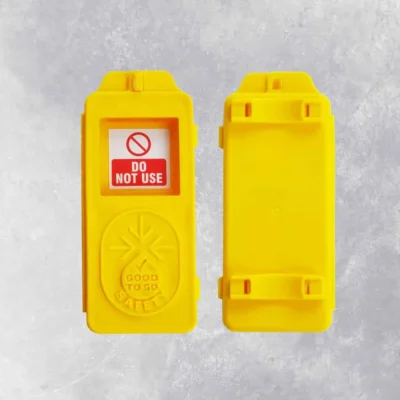
- Put the top copy in the status tag so the trailer shows as good to go or do not use.
- Leave the carbon copy in the book as the yard record.
- Seal the tag so last week’s sheet cannot cover a lamp found out this morning.
- After a knock, a tyre change or a different towing vehicle, complete a new sheet.
Daily kits match trailers that move every shift. Weekly kits suit a recorded weekly inspection where that is what has been set. Neither kit is a roadworthiness test.
Holders and the inspection station keep books in the yard office so the pad is not living in a different trailer’s toolbox.
Choose the right trailer inspection products
The printed items for this equipment are the book and the poster. The rest is shared Good to Go hardware.
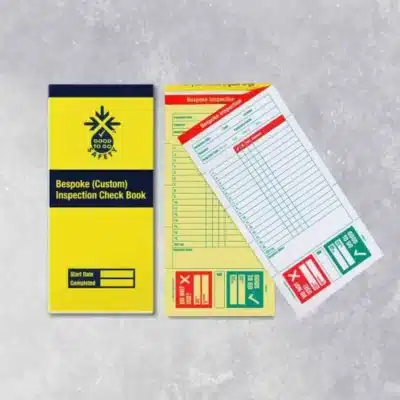
- Trailer Inspection Books – 25 Checklists — carbon-copy pre-use sheets for commercial and industrial trailers.
- Create Your Own Inspection Books – 25 Checklists — blank books if a house form or an unusual skeletal / cage trailer is not covered.
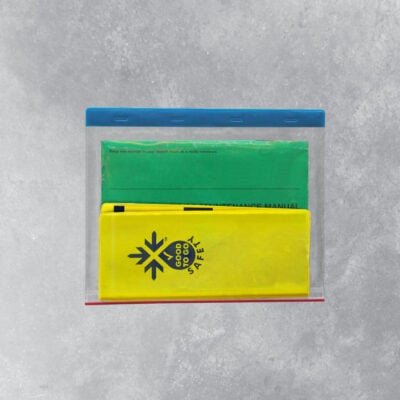
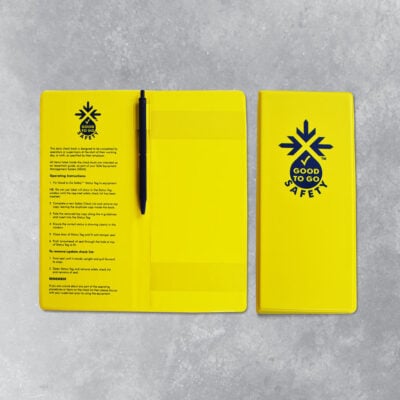
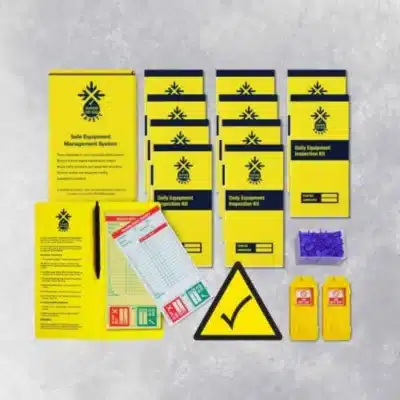
- Equipment Inspections – Daily Checklist Kits — select the trailer option. Checklists, tags, seals, wallet and pen.
- Equipment Inspections – Weekly Checklist Kits — trailer option for a weekly recorded inspection.
- Good To Go Safety Status Tag and Anti-Tamper Seals (Pack of 100) — fit at the hitch or drawbar.
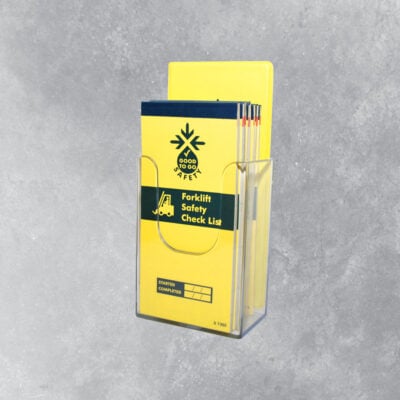
- Weather Resistant Inspection Holder, Check Book Wallet & Pen and Equipment Inspection Book Dispenser — keep the current book with the trailer park.
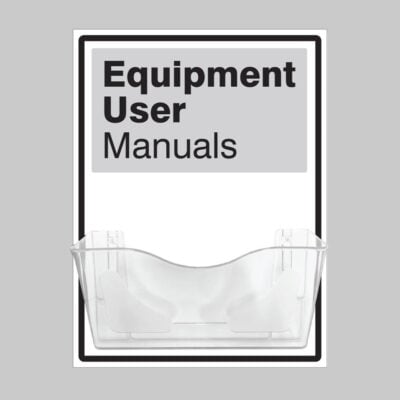
- Inspection Information Station and Equipment User Manuals – Document Holder — wall storage for books and load-security notes.
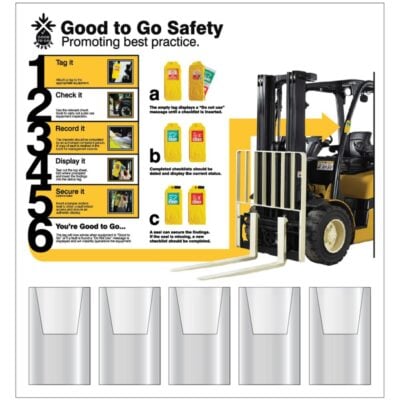
- Trailer Inspection Checklist – A2 Safety Poster — wipe-clean reminder of the check points.
A farm tractor, warehouse tow tractor or car/van has its own book.
Who these products are for
They are for people who hitch something on behind:
- Plant and construction teams towing plant trailers and low-loaders
- Farms and estates running agricultural trailers
- Hire desks issuing trailers with a consistent check method
- Facilities and logistics teams moving yard trailers and cage trolleys
- Supervisors collecting books when the combination comes back
If the same fleet also runs the towing vehicle, keep that vehicle on its own Good to Go book.
Trailer inspection FAQs
Does a workplace trailer need a LOLER examination?
Not for ordinary towing. PUWER still requires maintenance and inspection. Lifting equipment on the trailer is a different duty.
Is this book an MOT or plating record?
No. It records the pre-use check. Road trailers still need whatever roadworthiness tests apply to that vehicle.
How often should the checklist be completed?
Before the trailer is towed is the usual pattern. A trailer that has stood unused still needs a look before it moves.
Does the tractor or tug book cover the trailer?
No. Use this book for the trailer and the matching book for the towing vehicle.
Where should the status tag go?
At the hitch or on the drawbar, where the next person will see it before they couple up.
What if the trailer has no road lights?
Check the items that exist. Use Create Your Own if the printed 7/13-pin and lamp list does not match a yard-only trailer.
Free UK mainland delivery on orders over £50. Trade discounts and bespoke options are available for fleet packs or a different checklist layout.