-
Equipment Inspections – Daily Checklist Kits
£124.00 Ex. VAT Select options This product has multiple variants. The options may be chosen on the product page -
Equipment Inspections – Weekly Checklist Kits
£40.00 Ex. VAT Select options This product has multiple variants. The options may be chosen on the product page








What vehicle inspections are required?
A car or van used for work sits under health and safety law as well as road traffic law. Employers must take reasonable steps to make sure the vehicle is safe and remains safe. HSE driving-at-work guidance is explicit: workers should carry out and record daily vehicle checks, defects should be reported and put right, and an MOT only covers basic defects — it does not prove the vehicle is safe today.
PUWER applies where the vehicle is work equipment. It must be suitable for the job, maintained, and inspected where deterioration could cause harm. That sits beside insurance, licensing and roadworthiness duties; it does not replace them.
Privately owned vehicles used for work (grey fleet) still have to be safe. The employer’s policy should say what check is expected. These books can record that check if the site chooses to use the same method.
These products record the walk-round before the journey. They are not an MOT certificate and they are not a driving licence check.
What should a vehicle pre-use check cover?
Do the walk-round before the first journey of the day, not at the first set of lights.
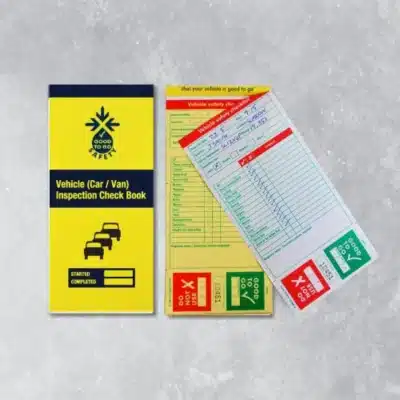
The Fleet Vehicle (Car / Van) Inspection Books are written for cars, vans and light commercials. The product listing covers:
- Oil, power steering, coolant, brake fluid and screen wash
- Windows, wipers, mirrors and exterior bulbs
- Tyre condition and pressure
- Safety kit and mandatory vehicle documents
Look at seat belts and load security on a van before it is packed. Confirm the spare or kit is actually in the vehicle. If a lamp is out, a tyre is under the legal tread or a fluid is on the floor, the vehicle stays in the yard.
A trailer on the back is a separate item. Check the coupling, then use the trailer book.
How the Good to Go inspection system works
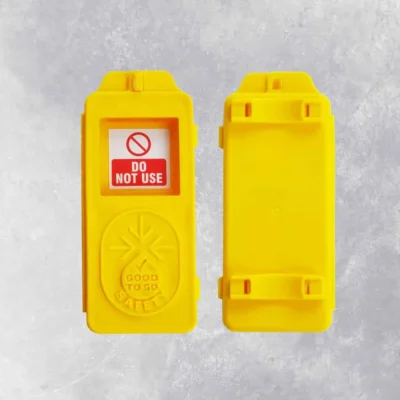
The tag sits on the windscreen, dashboard or door — wherever the next driver will see it before they take the keys.
- The driver completes the fleet vehicle checklist before leaving.
- The top copy goes into the status tag so the vehicle shows as good to go or do not use.
- The carbon copy stays in the book as the fleet record.
- An anti-tamper seal closes the tag so yesterday’s sheet cannot cover a tyre found flat this morning.
- After a defect, a weekend stand or a change of driver, complete a new sheet before the next journey.
Daily kits match HSE’s recorded daily-check expectation. Weekly kits suit a recorded weekly inspection where that is what the fleet policy has set. Neither kit is a service or an MOT.
Holders and the inspection station keep books in the fleet office so the pad is not living in a different glovebox.
Choose the right vehicle inspection products
The printed items for this equipment are the book and the poster. The rest is shared Good to Go hardware.
- Fleet Vehicle (Car / Van) Inspection Books – 25 Checklists — carbon-copy pre-use sheets for cars, vans and light commercials.
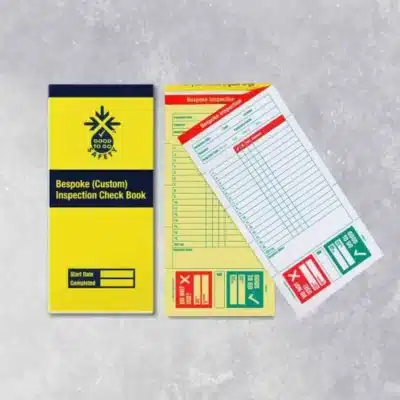
- Create Your Own Inspection Books – 25 Checklists — blank books if a house form or an unusual LCV layout is not covered.
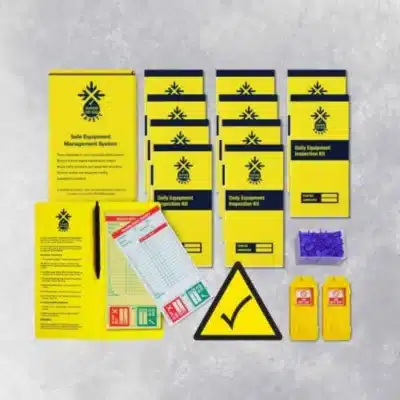
- Equipment Inspections – Daily Checklist Kits — select the car / van option. Checklists, tags, seals, wallet and pen.
- Equipment Inspections – Weekly Checklist Kits — vehicle option for a weekly recorded inspection.
- Good To Go Safety Status Tag and Anti-Tamper Seals (Pack of 100) — fit at the windscreen, dash or door.
- Weather Resistant Inspection Holder, Check Book Wallet & Pen and Equipment Inspection Book Dispenser — keep the current book in the vehicle or fleet office.
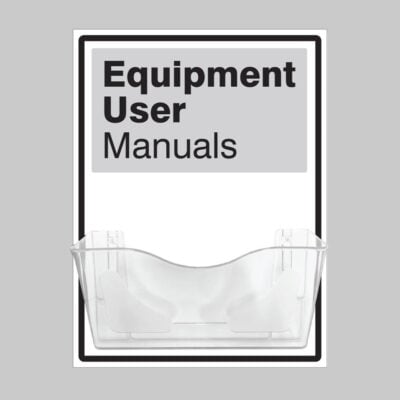
- Inspection Information Station and Equipment User Manuals – Document Holder — wall storage for books and handbook packs.
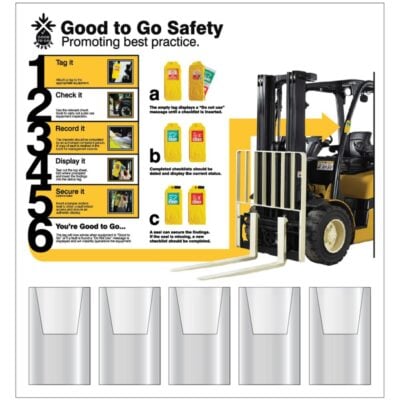
- Fleet Vehicle Inspection – A2 Safety Poster — wipe-clean reminder of the check points.
A plant trailer, agricultural tractor or electric tug has its own book.
Who these products are for
They are for people who send cars and vans out on the road for work:
- Fleet and facilities managers running company cars and LCVs
- Drivers doing the morning walk-round
- Contractors and service companies with mixed van fleets
- Hire desks issuing cars or vans with a consistent check method
- Safety managers keeping recorded daily checks beside MOT and service files
If the same business also tows trailers or runs site plant, keep those on their own Good to Go books.
Vehicle inspection FAQs
Does an MOT replace the daily check?
No. HSE is clear that an MOT only covers basic defects and does not guarantee the vehicle is safe. Record the pre-use check as well.
How often should the book be completed?
Before the vehicle is driven for work is the usual pattern. Daily recorded checks are what HSE driving-at-work guidance describes.
Does PUWER apply to a company car?
Yes, where the car is work equipment. Road traffic law still applies on the public highway.
Can grey-fleet drivers use this book?
Yes, if that is how the employer wants the check recorded. The vehicle still needs insurance, MOT and a policy that says unsafe vehicles are not driven.
Where should the status tag go?
On the windscreen, dashboard or door, where the next driver will see it before they take the keys.
Can I use this book on a tractor or a trailer?
No. Use the tractor or trailer book. This sheet is for cars, vans and light commercials.
Free UK mainland delivery on orders over £50. Trade discounts and bespoke options are available for fleet packs or a different checklist layout.