-
Equipment Inspections – Daily Checklist Kits
£124.00 Ex. VAT Select options This product has multiple variants. The options may be chosen on the product page -
Equipment Inspections – Weekly Checklist Kits
£40.00 Ex. VAT Select options This product has multiple variants. The options may be chosen on the product page



What racking inspections are required?
Racking is work equipment under PUWER. Because safety depends on how it is installed and how it is used, it must be inspected after installation and at suitable intervals, with records kept.
HSE HSG76 and SEMA describe three layers, not one annual visit:
- Immediate reporting — truck drivers and pickers stop and tell someone when they hit an upright or see a beam drop.
- Regular visual inspection — usually weekly — by a nominated Person Responsible for Racking Safety (PRRS).
- Expert inspection — at least every 12 months — by a competent person. SEMA Approved Racking Inspectors are the usual industry benchmark.
Red damage means unload and isolate the bay at once. Amber damage is repaired on a short timescale. Green damage is recorded and watched. Do not leave a twisted upright in service because the annual date is next month.
These books support the internal visual layer and the quarantine tag. They are not a SARI report.
What should a racking pre-use check cover?
On racking the useful check is a walk of the aisle, not a pre-start of a machine.
The Racking Inspection Books are written for that internal inspection. The product listing covers:
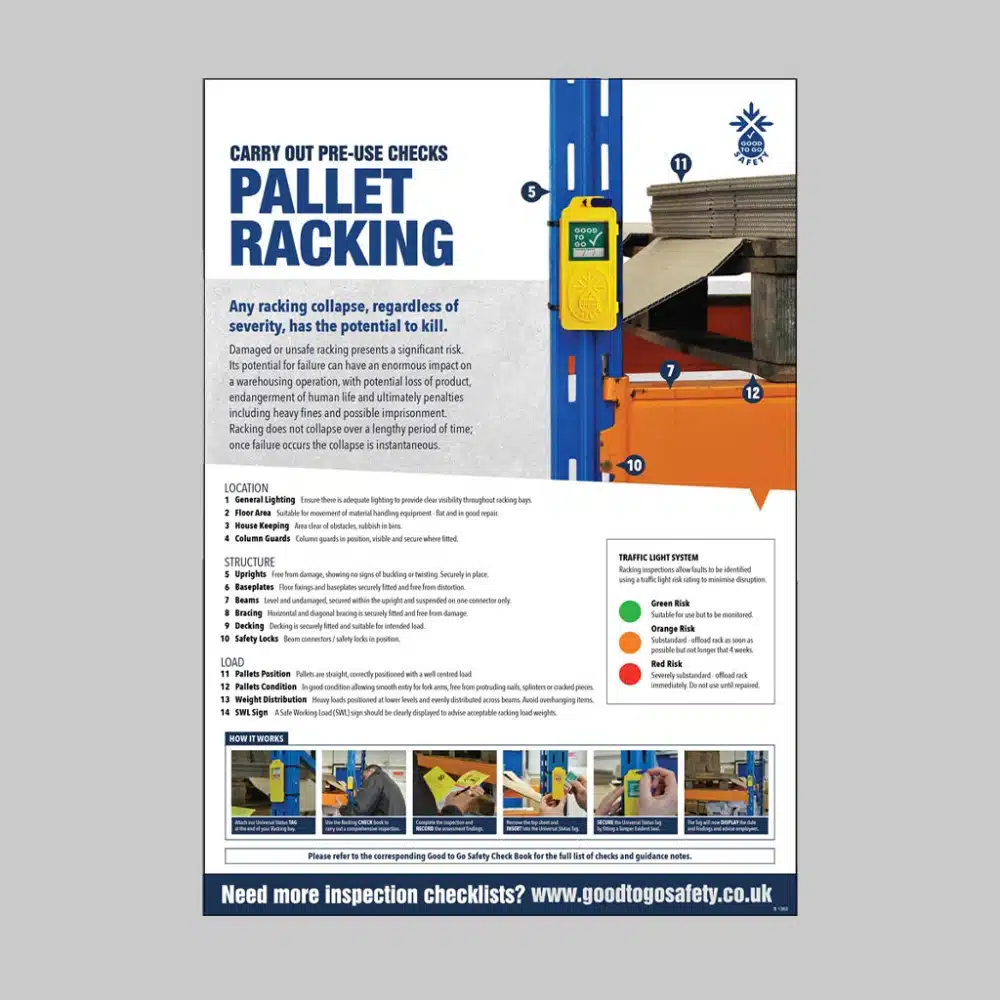
- Uprights, beams, baseplates and floor fixings for dents, buckle or deflection
- Green / amber / red grading of damage in line with SEMA practice
- Safe working load notices, pallet position and weight distribution
- Locking pins, beam safety locks and column guards
Look at the first two metres of each upright — that is where forks hit. Check the beam connectors have their locks in. If a load notice is missing, treat the bay as unknown capacity until it is replaced.
Housekeeping is part of the same walk: crushed pallets, goods hanging off the beam and blocked aisles hide damage and cause the next strike.
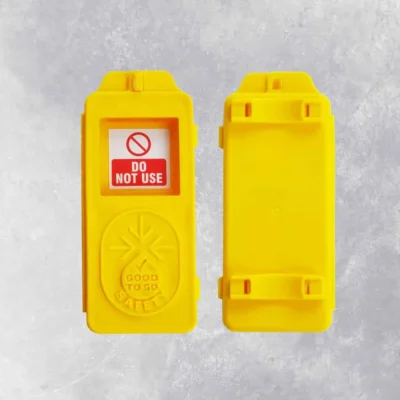
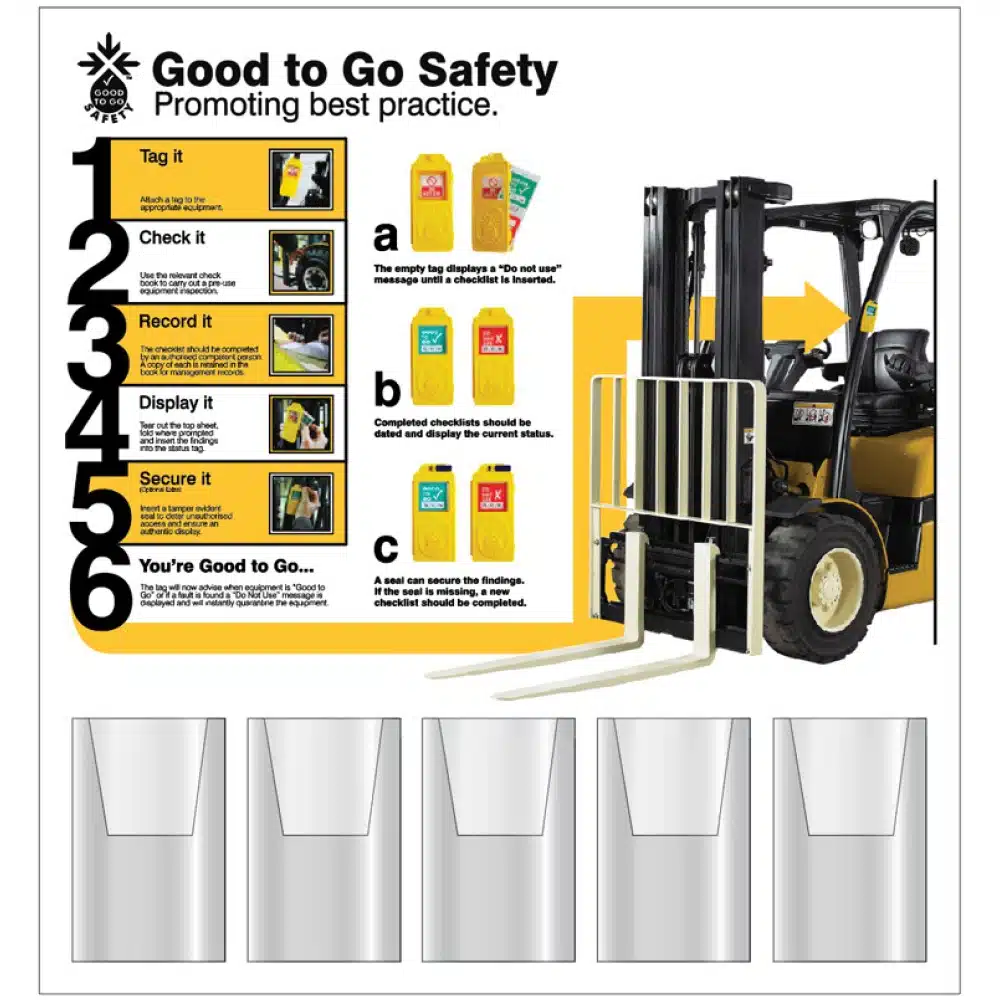
How the Good to Go inspection system works
The tag sits at the end of the bay or aisle, next to the load notice, where the next truck driver will see it.
- The PRRS or nominated person completes the racking checklist for that run.
- The top copy goes into the status tag so the bay shows as good to go or do not use.
- The carbon copy stays in the book as the warehouse record.
- An anti-tamper seal closes the tag so a do-not-use bay cannot be quietly put back into service.
- After a collision, offload the damaged bay, keep the tag on do not use, and do not reload until it is repaired and inspected.
Weekly kits match the usual HSG76 visual cycle. Daily kits suit high-throughput aisles where trucks run all day. Neither kit is the annual expert inspection.
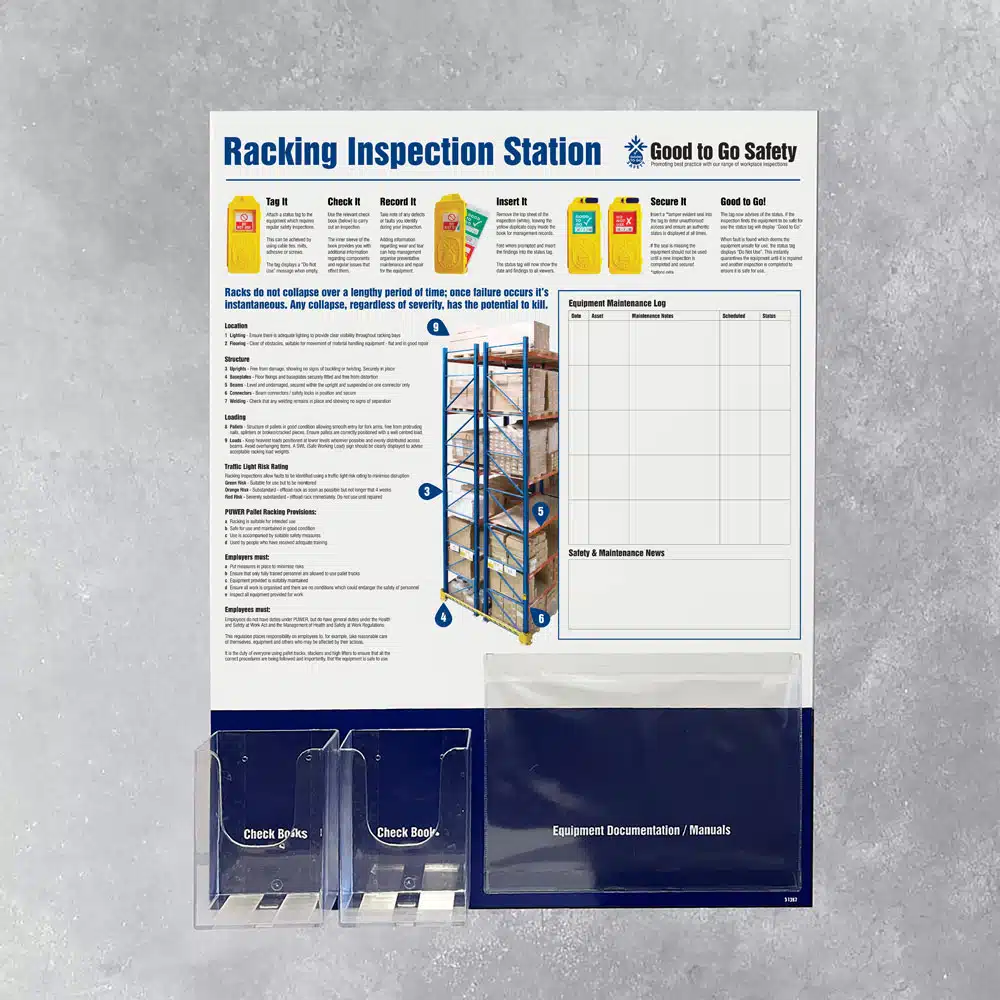
The Racking Inspection and Maintenance Station gives the warehouse office a wall for spare books, load notices and a dry-wipe list of bays waiting on repair.
Choose the right racking inspection products
The printed items for this equipment are the book and the poster. There is also a dedicated racking station. The rest is shared Good to Go hardware.
- Racking Inspection Books – 25 Checklists — carbon-copy sheets for internal visual inspections, with damage grading.
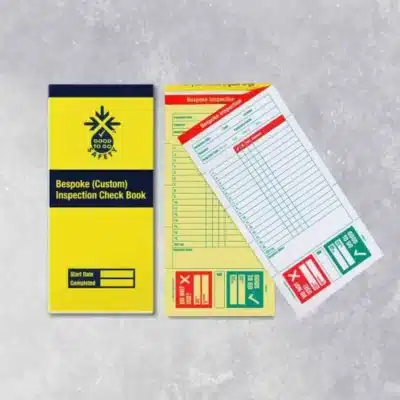
- Create Your Own Inspection Books – 25 Checklists — blank books if a house form or an unusual cantilever / drive-in system is not covered.
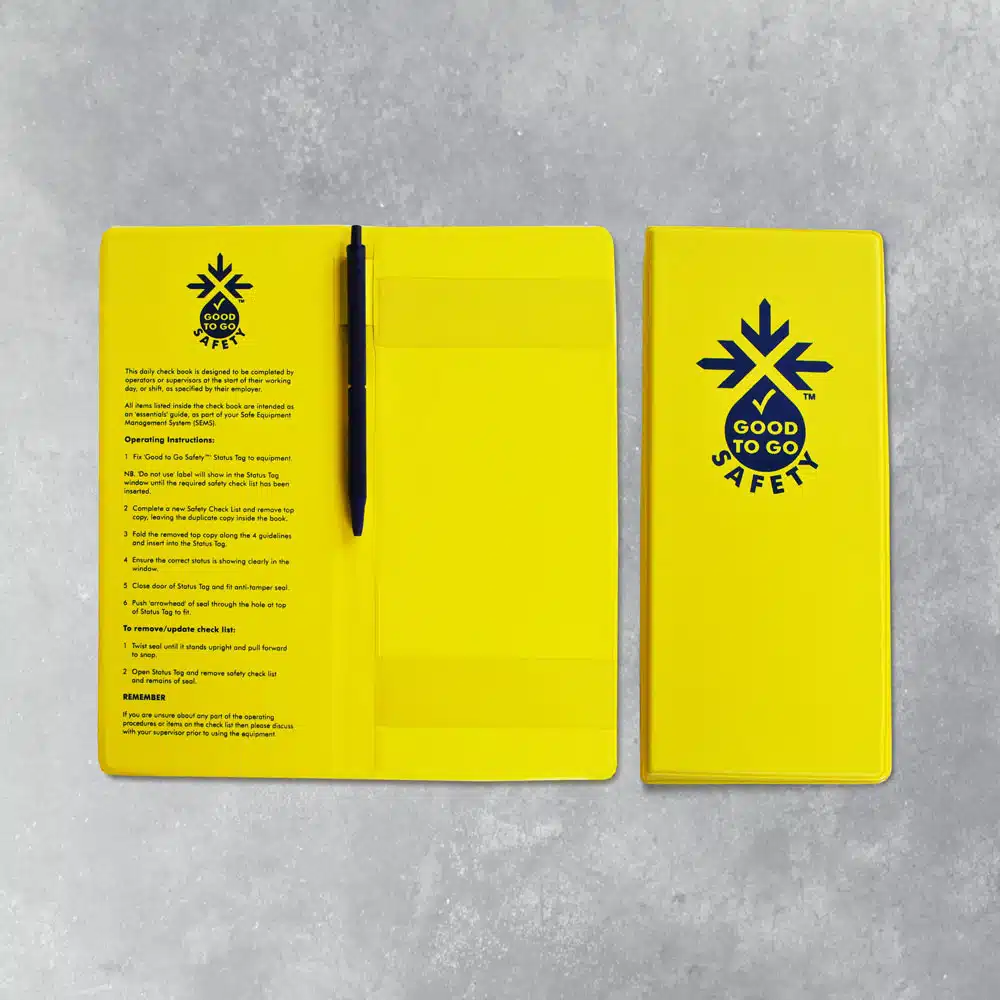
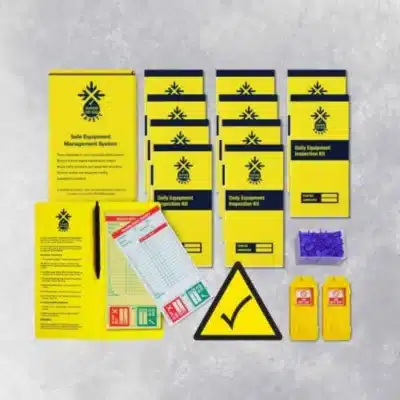
- Equipment Inspections – Weekly Checklist Kits — select the racking option. Checklists, tags, seals, wallet and pen for the regular PRRS walk.
- Equipment Inspections – Daily Checklist Kits — racking option where the recorded walk is daily.
- Racking Inspection and Maintenance Station — wall board for books, guidance and maintenance notes.
- Inspection Information Station — larger central board if the same wall also holds other equipment books.
- Good To Go Safety Status Tag and Anti-Tamper Seals (Pack of 100) — fit at the end frame beside the SWL notice.
- Weather Resistant Inspection Holder, Check Book Wallet & Pen and Equipment Inspection Book Dispenser — keep the current book with the PRRS.
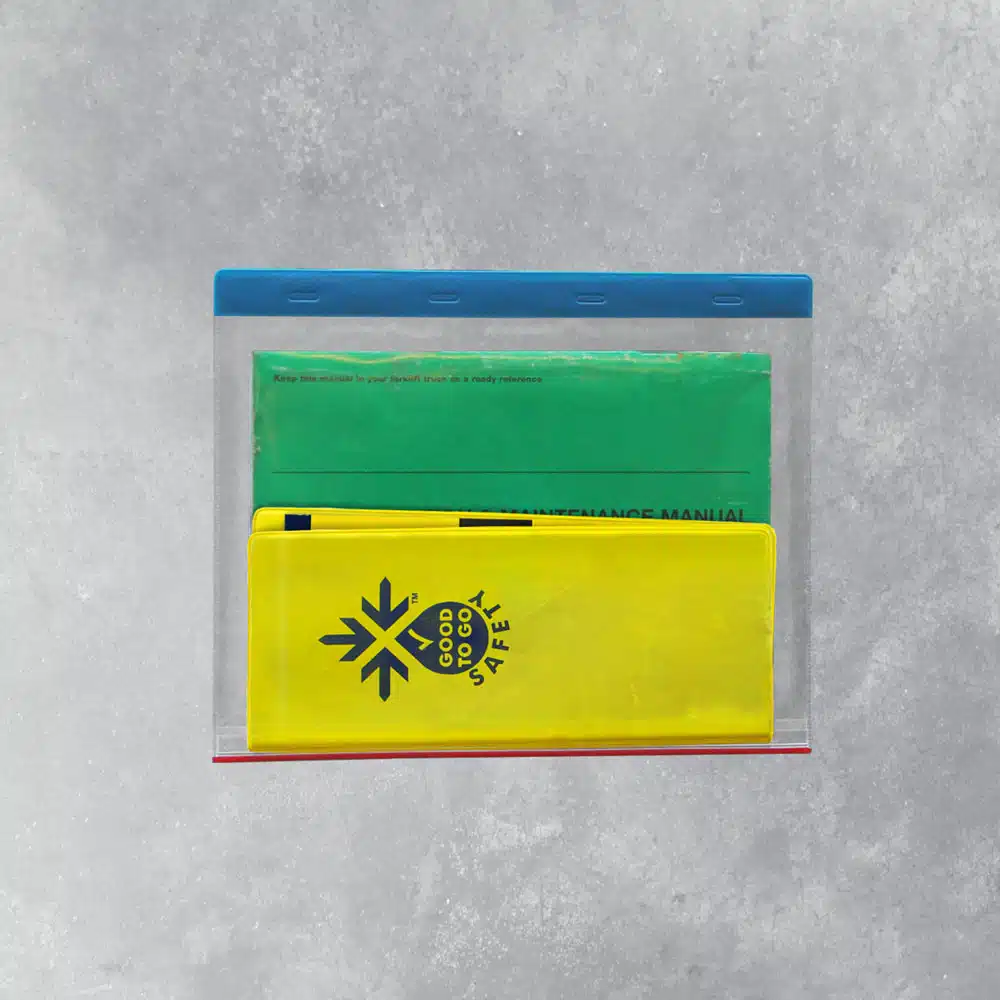
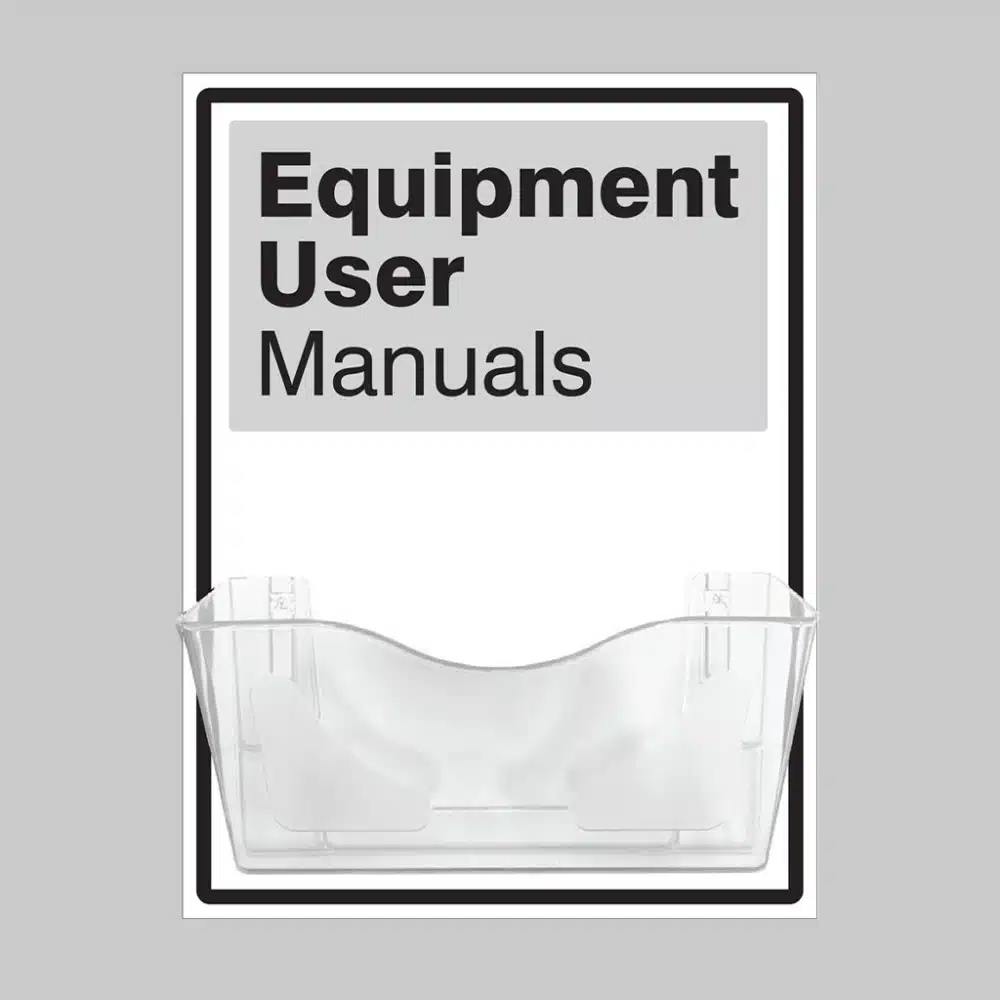
- Equipment User Manuals – Document Holder — for manufacturer data and the last expert report.
- Racking Inspection Checklist – A2 Safety Poster — wipe-clean reminder of the check points.
A pallet truck or forklift has its own book. The truck that hits the rack is a separate inspection.
Who these products are for
They are for people who keep pallet racking standing:
- The nominated Person Responsible for Racking Safety
- Warehouse supervisors walking aisles after a busy shift
- Distribution and manufacturing sites with adjustable pallet racking
- Facilities teams responsible for a stores mezzanine or spare-parts rack
- Safety managers keeping internal records between annual expert inspections
If the same building also runs forklifts and pallet trucks, keep those on their own Good to Go books.
Racking inspection FAQs
How often should warehouse racking be inspected?
Damage should be reported when it happens. HSG76 and SEMA practice point to a regular visual check, usually weekly, by a nominated person, and an expert inspection at least every 12 months.
Does the Good to Go book replace a SEMA inspector?
No. The book records the internal walk. The annual inspection is done by a competent person and produces a separate report.
What does a red tag mean?
The bay is not used. Unload it, isolate it, and leave it tagged out until it is repaired and inspected.
Where should the status tag go?
On the end upright or end frame, next to the load notice, where the next driver will see it before they enter the aisle.
Can I inspect drive-in or cantilever racking with this book?
Confirm the printed list matches that system. Use Create Your Own if it does not.
Do I still need load notices if the tag is on the bay?
Yes. The tag shows the last check. The notice shows the capacity. Both should be present and readable.
Free UK mainland delivery on orders over £50. Trade discounts and bespoke options are available for multi-aisle packs or a different checklist layout.