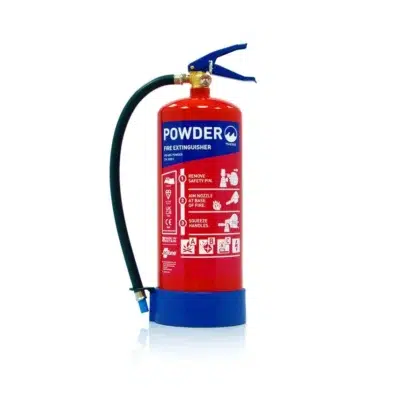
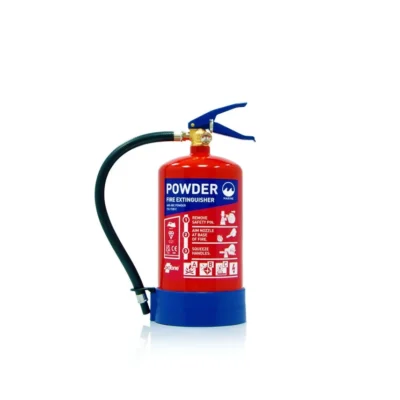
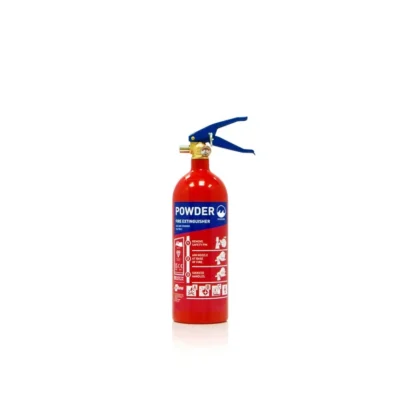
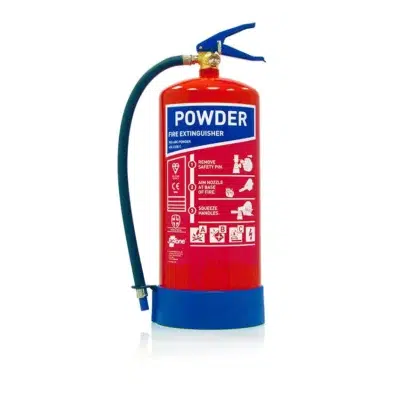
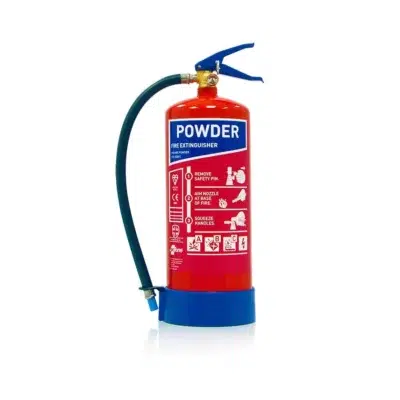
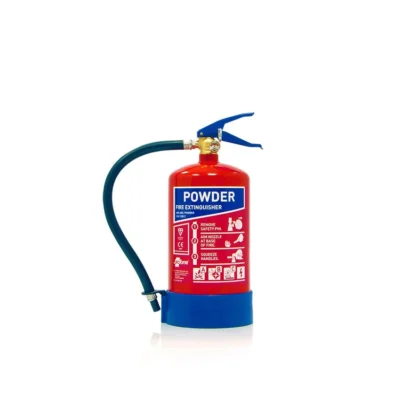
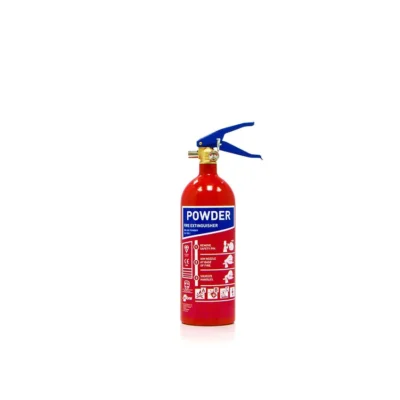
What is an ABC powder fire extinguisher?
An ABC (dry chemical) extinguisher stores a finely divided powder and a nitrogen charge. On discharge the cloud:
- Melts and smothers Class A embers
- Interrupts the chain reaction on Class B liquids
- Inhibits combustion of Class C gases
- Can be used on electrical equipment because the agent is non-conductive
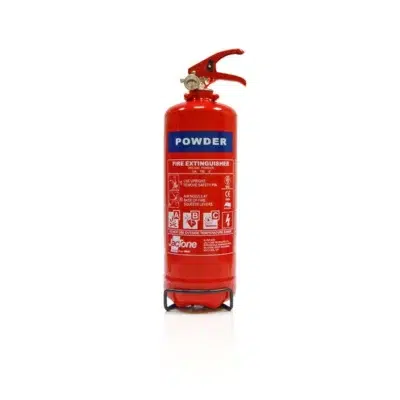
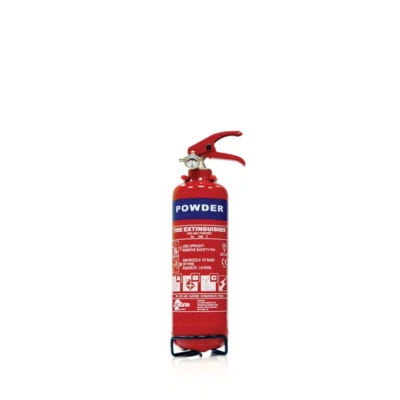
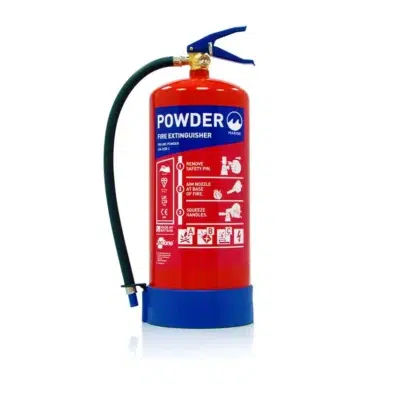
UK colour-coding is blue on the handle, header and base. That is how staff pick powder off a mixed fire point.
It is the most versatile portable extinguisher on a mixed-risk site. It is also the messiest. After use you will have powder on surfaces, in motors and in the air. That is why many offices and server rooms specify foam plus CO2 instead, and keep powder for vehicles, plant and outdoors.
What is it used for?
- Workshops, factories and warehouses with solids, fuels and gases on the same floor
- Garages, plant yards and construction sites
- Vehicles, plant cabs and small plant rooms
- Outdoor or unheated locations (powder operates down to −20 °C)
- Vessels and offshore spaces that need MED-approved ABC cover
Particularly effective on petrol and other volatile liquids — the reason it remains the default in many vehicle and garage specifications.
Who is it for?
Facilities and H&S managers, warehouse and production operators, garage and fleet workshops, contractors, construction and plant hire, and vessel operators who need MED powder. Indoor use must be written into the fire risk assessment: powder can reduce visibility and affect people with respiratory issues.
What problem does it solve?
A water extinguisher fails on a diesel spill. Foam fails below +5 °C and does not cover gas. CO2 leaves a liquid fire able to flash back and has no Class A rating on the models we sell. Powder is the one portable that can take A, B and C in a single hit, including in a van at −10 °C. That is the practical reason it is still the UK’s general-purpose extinguisher for mixed industrial risk.
Sizes, ranges and specification
| Model | Fire rating | Discharge (avg.) | Typical size / filled weight | Notes |
|---|---|---|---|---|
| 1 kg Basic | 5A | 34B | C | ~6 s | 330 × 85 mm / ~1.96 kg | Pack of 5 — vehicles, small rooms |
| 2 kg Basic | ABC | — | Compact 2 kg | Pack of 3 — fleets and multi-site |
| 2 kg Premium / Marine | ABC | — | Workplace / vehicle 2 kg | Marine = MED |
| 4 kg Premium / Marine | 21A | 113B | C | ~12.9 s | 411 × 160 mm / ~6.95 kg | Mid-size plant and workshops |
| 6 kg Premium / Marine | 27A | 183B | C | ~16.1 s | 517 × 160 mm / ~9.55 kg | Standard industrial size |
| 9 kg Premium / Marine | 43A | 233B | C | ~16.7 s | 552 × 189 mm / ~13.6 kg | Large floor areas, high A/B rating |
Common points:
- Operating / storage −20 °C to +60 °C
- 15 bar at 20 °C, nitrogen propellant
- Deep-drawn steel cylinder, brass valve, blue colour-coding
- Kitemark to BS EN3, UKCA, CE; 5-year guarantee on Premium
- Marine 2 / 4 / 6 / 9 kg: Merchant Shipping (Marine Equipment) Regulations SI 2016/1025
1–2 kg for vehicles, plant cabs and compact fire points (Basic sold in packs). 4–6 kg for most workshops and warehouses. 9 kg where the assessment wants the 43A | 233B rating. Marine when the vessel spec demands MED, not only EN3.
How to use it — and where not to
Pull the pin, aim at the base, squeeze, sweep. On liquids, attack from upwind and do not drive burning fuel toward people. Expect a dense cloud. Get out if visibility collapses.
Do not rely on ABC powder for:
- Class F cooking oils — use wet chemical
- Lithium-ion thermal runaway — use a dedicated lithium / AVD unit
- Clean rooms, comms rooms or precision electronics unless the RA accepts total contamination
- Occupied interiors without considering inhalation and visibility
Isolate electrical supply if it is safe. Service under BS 5306-3. After any discharge, replace or refill — a partly used powder unit will cake and fail.
Why buy powder extinguishers from HSE Store
HSE Store stocks the current Jactone ABC family from 1 kg multipacks through 9 kg Premium and the full Marine 2–9 kg MED set. You get published A/B/C ratings, a −20 °C operating range, British manufacture, and the stands, covers and ID signs to finish the fire point.
Frequently asked questions
What fires can ABC powder put out?
Class A solids, Class B flammable liquids and Class C flammable gases, plus use on electrical equipment. Ratings on this range go from 5A | 34B | C (1 kg) to 43A | 233B | C (9 kg). Not Class F, not a lithium-ion agent.
Why is powder so common on vehicles and building sites?
It covers three fire classes, works from −20 °C, and is compact. Foam freezes; water is useless on fuel. That combination is why 1 kg and 2 kg units sit in vans and cabs.
Can I use powder indoors?
Only if the fire risk assessment says so. The discharge fills the room with dust, cuts visibility and contaminates kit. Offices and server rooms usually specify foam and CO2 instead.
2 kg, 6 kg or 9 kg?
2 kg for vehicles and small rooms. 6 kg (27A | 183B) as the default workshop/warehouse size. 9 kg (43A | 233B) for larger floor areas or a higher published rating.
Are Marine powder extinguishers a different agent?
Same ABC powder. Marine 2, 4, 6 and 9 kg add MED approval under SI 2016/1025 for vessels and offshore use, on top of BS EN3 / UKCA / CE.
Will powder ruin electrical equipment?
It can. The powder is non-conductive in use, but the residue is corrosive and invasive. If the asset matters more than mixed-class coverage, put CO2 on the electrical risk and keep powder for plant and fuel.