What is a CO2 fire extinguisher?
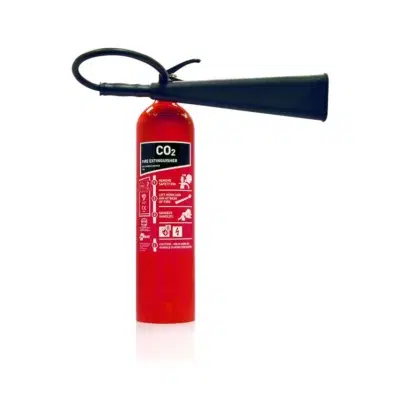
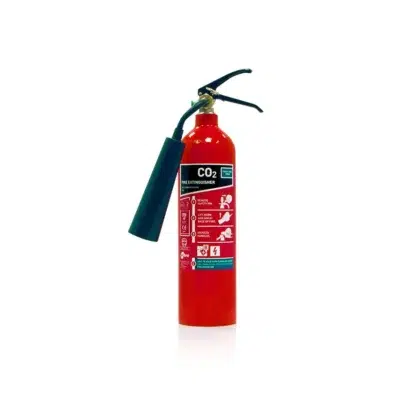
A CO2 extinguisher stores carbon dioxide as a liquefied gas under pressure in a high-grade aluminium cylinder. When the squeeze grip is opened, the liquid expands through the horn as a cold gas (and a short-lived “snow”). The cloud reduces the oxygen available to the fire and takes heat out of the flame. When the discharge stops, the gas disperses. Nothing is left on the surface.
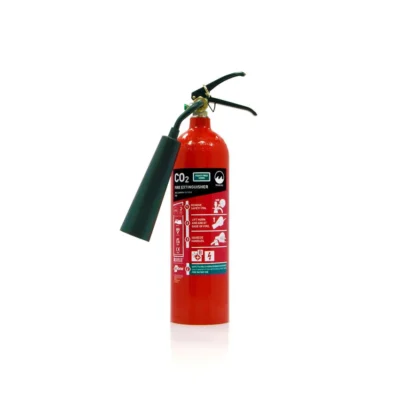
That is why CO2 is specified next to electrical equipment and anywhere a powder or foam clean-up would damage kit or halt production. In UK colour-coding the body is red with black identification on the handle and header.
These units are rated for Class B (flammable liquids such as petrol, solvents, paints and many oils) and for use on electrical fires. They do not carry a Class A rating on the models we stock, and they are not Class F kitchen extinguishers.
What is it used for?
- Electrical cupboards, distribution boards, server and comms rooms
- Offices with PCs, printers and copiers
- Workshops and factories with machinery, control panels and flammable liquids
- Laboratories and test areas where residue is unacceptable
- Plant rooms, generators and switch rooms
- Boats, ships and offshore plant (Marine MED models)
CO2 knocks flame down quickly and leaves the equipment usable after isolation and inspection. It does not replace a water, foam or wet-chemical extinguisher on the other fire classes in the same building.
Who is it for?
Facilities and safety managers, electrical contractors, office and warehouse operators, manufacturers, laboratories, education and healthcare estates, and vessel owners who need MED-approved kit. Anyone compiling a fire risk assessment under the Regulatory Reform (Fire Safety) Order should match extinguisher type to the actual hazard — CO2 for B and electrical, not as a universal unit.
What problem does it solve?
Water conducts. Powder wrecks electronics and is miserable to clear. Foam leaves a blanket that is wrong on live boards. CO2 deals with the two risks that sit together in most plant and office spaces — a flammable-liquid spill and an electrical source — without a secondary damage bill. The practical reason to buy one is to put a compliant, residue-free first-aid fire appliance next to the kit you cannot afford to scrap.
Sizes, ranges and specification
| Model | Fire rating | Discharge (avg.) | Typical size | Filled weight | Notes |
|---|---|---|---|---|---|
| Premium 2 kg frost-free | 55B | ~9.7 s | 500 × 117 mm | ~5.0 kg | Frost-free horn, colour-coded handle |
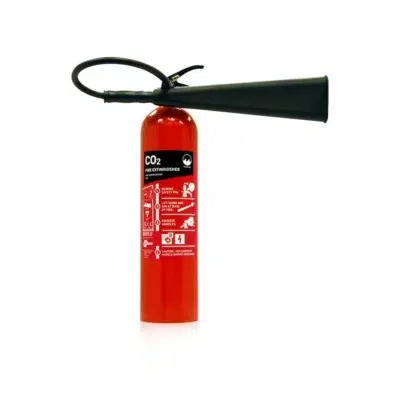
| Premium 5 kg | 70B | ~16.8 s | 670 × 152 mm | ~11.8 kg | Higher B rating, longer discharge |
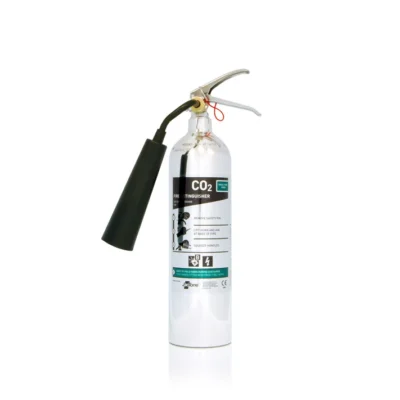
| Prestige 2 kg frost-free | 55B | ~9.7 s | 500 × 117 mm | ~5.0 kg | Polished finish, stainless handle |
| Marine 2 kg frost-free | 55B | ~9.7 s | Compact 2 kg envelope | — | MED / SI 2016/1025 |
| Marine 5 kg | 70B | ~16.8 s | 670 × 152 mm | ~11.8 kg | MED / SI 2016/1025 |
All operate from −20 °C to +60 °C. Construction is aluminium with a professional valve and horn assembly. Premium and Marine models are LPCB and Kitemark certified to BS EN3 and carry UKCA and CE. Marine units are approved under the Merchant Shipping (Marine Equipment) Regulations SI 2016/1025 for commercial and British-flag vessels.
2 kg is the everyday office, vehicle and small-plant size — lighter to carry and fitted with a frost-free horn. 5 kg is the step-up for plant rooms, larger electrical rooms and marine engine spaces where you want the 70B rating and a longer discharge.
How to use it — and the limits
Pull the pin, aim the horn at the base of the fire, squeeze. Sweep. Keep a safe distance; the discharge is loud and very cold. Do not hold a metal horn — that is why 2 kg units here are frost-free. Isolate electrical supply if you can do it without putting yourself in the fire.
Do not rely on CO2 for:
- Class A fires (wood, paper, textiles) — no A rating on these models
- Class F cooking-oil fires — use wet chemical
- Lithium-ion battery thermal runaway — use a dedicated lithium / AVD agent
- Occupied cupboards or very small unventilated rooms without considering asphyxiation — CO2 displaces oxygen
After use, ventilate the space and have the extinguisher replaced or refilled. CO2 cylinders are pressure vessels and must be serviced under BS 5306-3 (visual inspections, and periodic discharge testing as required for CO2).
Why buy CO2 extinguishers from HSE Store
HSE Store stocks the genuine Jactone British-made 2 kg and 5 kg range across Premium, Prestige and Marine — the same family as the rest of our EN3 extinguisher offer. You get published fire ratings, frost-free 2 kg horns, MED options for vessels, and trade supply with stands, covers and fire-point signage. That is a complete B/electrical point, not a generic red cylinder.
Frequently asked questions
What fires can a CO2 extinguisher put out?
Class B flammable liquids and fires involving electrical equipment. The 2 kg models we sell are rated 55B; the 5 kg models are 70B. They are not rated for Class A solids or Class F cooking oils.
Will CO2 damage computers or switchgear?
The agent itself leaves no residue. Isolate power when safe, then discharge. Check the equipment after the incident; heat and smoke can still have caused damage even if the extinguisher did not.
Why do the 2 kg models have a frost-free horn?
CO2 leaves the cylinder far below freezing. A standard metal horn can cause cold burns if the operator grips it. Frost-free horns are fitted on our 2 kg Premium, Prestige and Marine units for that reason.
Do I need 2 kg or 5 kg?
2 kg for offices, vehicles and compact plant, where handling weight matters. 5 kg where the risk assessment wants a higher B rating and a longer discharge — plant rooms, larger electrical rooms and many marine engine spaces.
Are the Marine models different inside?
Same CO2 agent and similar 55B / 70B performance, but Marine 2 kg and 5 kg are MED approved under SI 2016/1025 for vessels and offshore use, on top of BS EN3 / Kitemark / UKCA / CE.
Can I use CO2 on a lithium-ion battery fire?
No. CO2 may knock visible flame down briefly; it does not stop thermal runaway. Use a purpose-designed lithium / AVD extinguisher and the correct isolation procedure.