
-
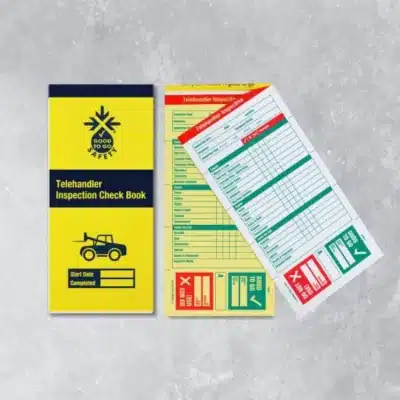
Telehandler Inspection Books – 25 Checklists
£6.11 Ex. VATEstimated Lead Time: 1 – 2 Working Days
Add to basket -
-
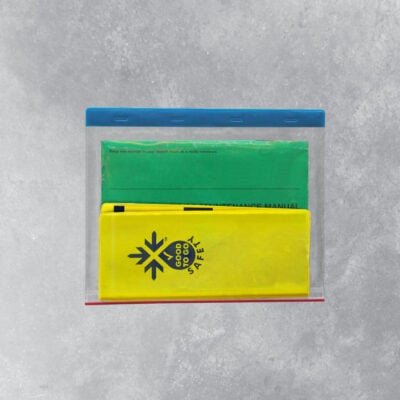
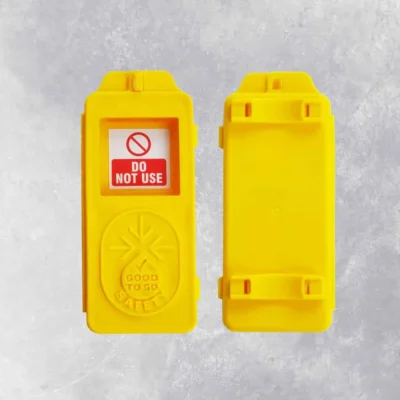
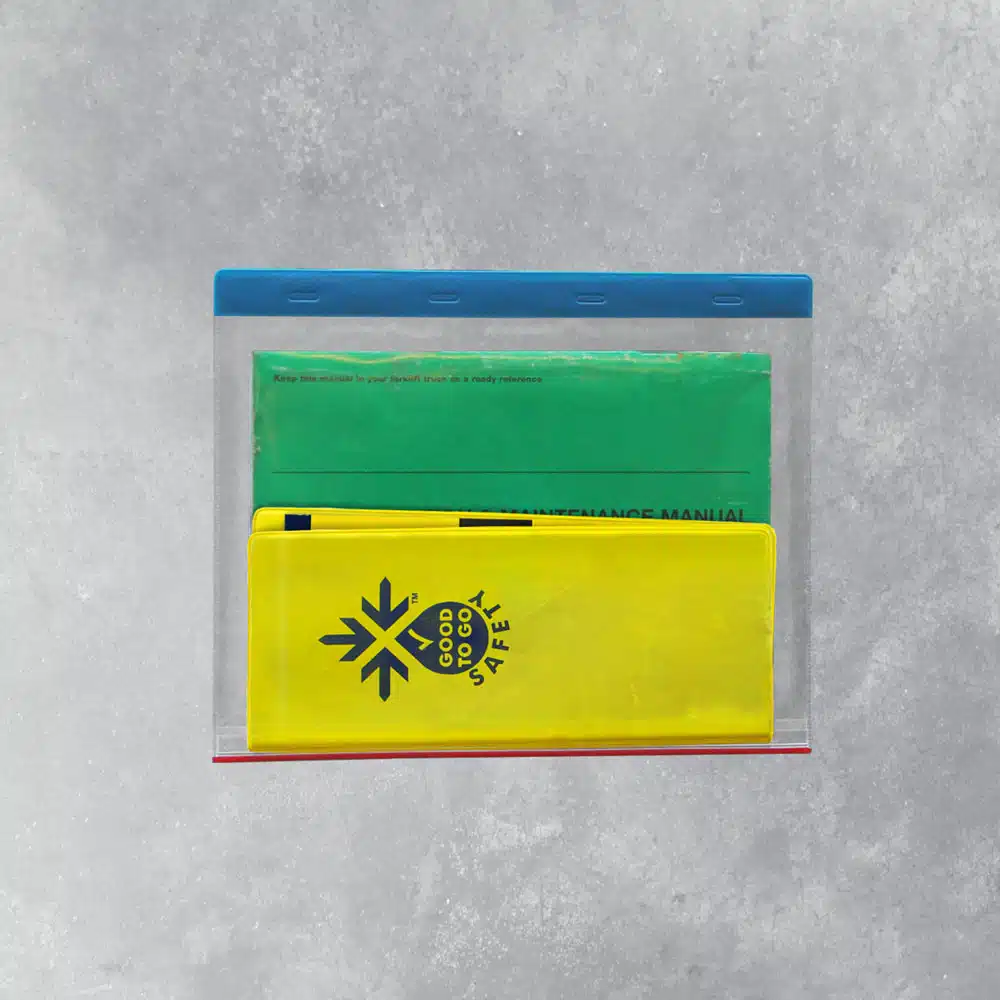
Good To Go – Weather Resistant Inspection Holder
£5.87 Ex. VATEstimated Lead Time: 1 – 2 Working Days
Add to basket -

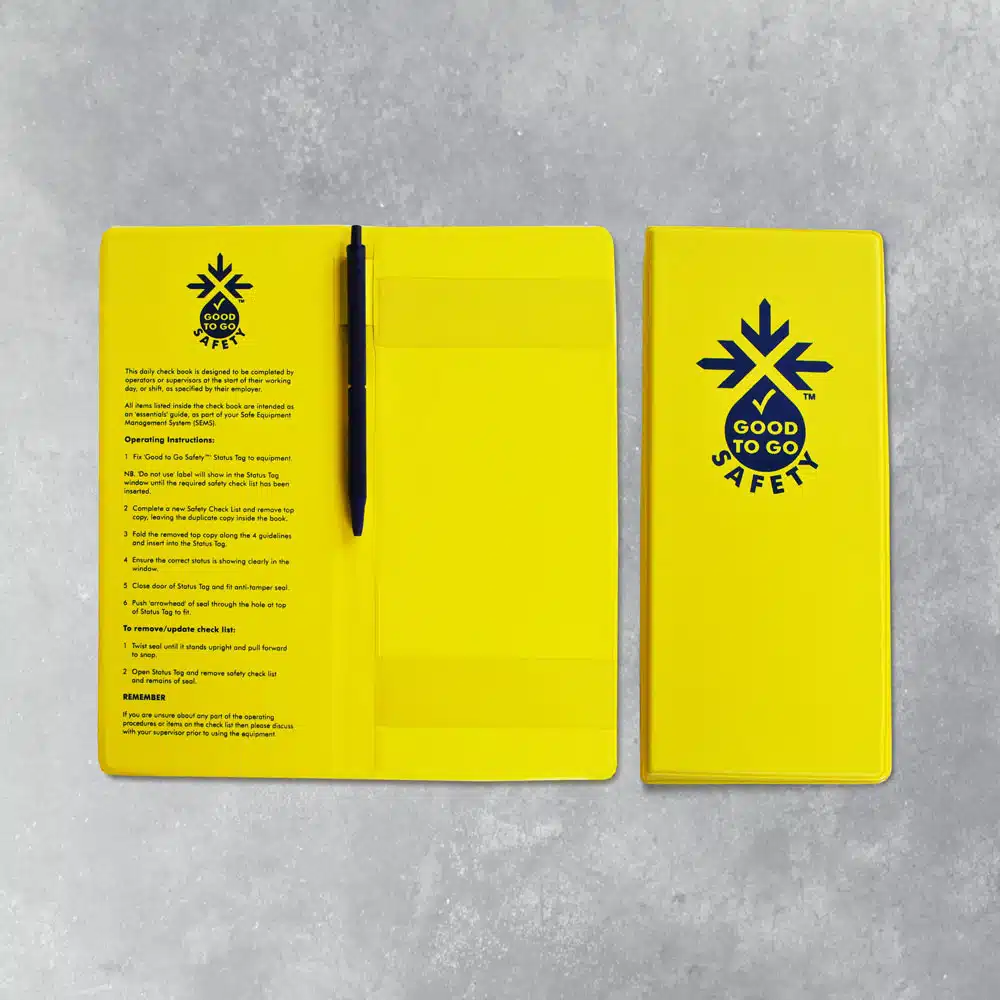
Good To Go – Equipment Inspection Check Book Wallet & Pen
£5.21 Ex. VATEstimated Lead Time: 1 – 2 Working Days
Add to basket -
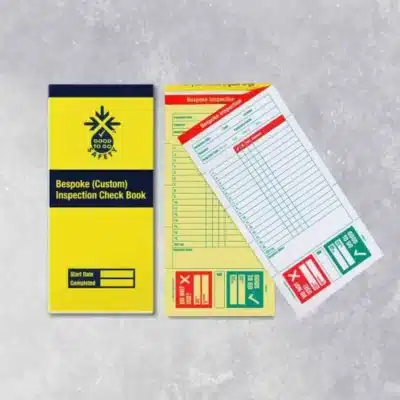
Create Your Own Inspection Books – 25 Checklists
£6.11 Ex. VATEstimated Lead Time: 1 – 2 Working Days
Add to basket -
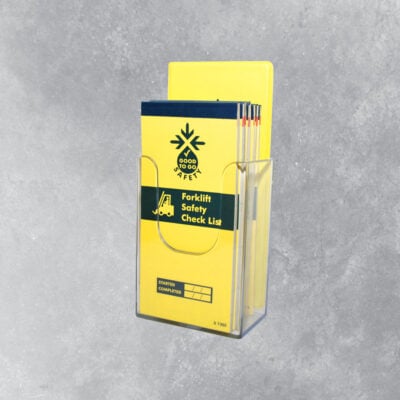
Good To Go – Equipment Inspection Book Dispenser
£12.76 Ex. VATEstimated Lead Time: 1 – 2 Working Days
Add to basket -
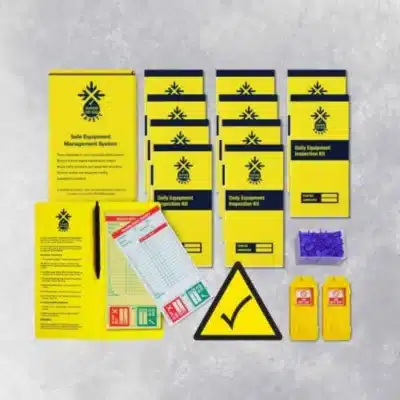
Equipment Inspections – Daily Checklist Kits
£115.07 Ex. VATEstimated Lead Time: 1 – 2 Working Days
Select options This product has multiple variants. The options may be chosen on the product page -

Equipment Inspections – Weekly Checklist Kits
£36.84 Ex. VATEstimated Lead Time: 1 – 2 Working Days
Select options This product has multiple variants. The options may be chosen on the product page -
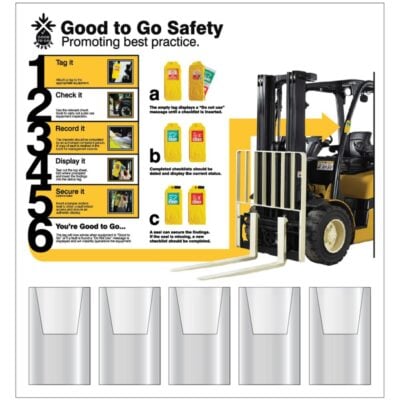
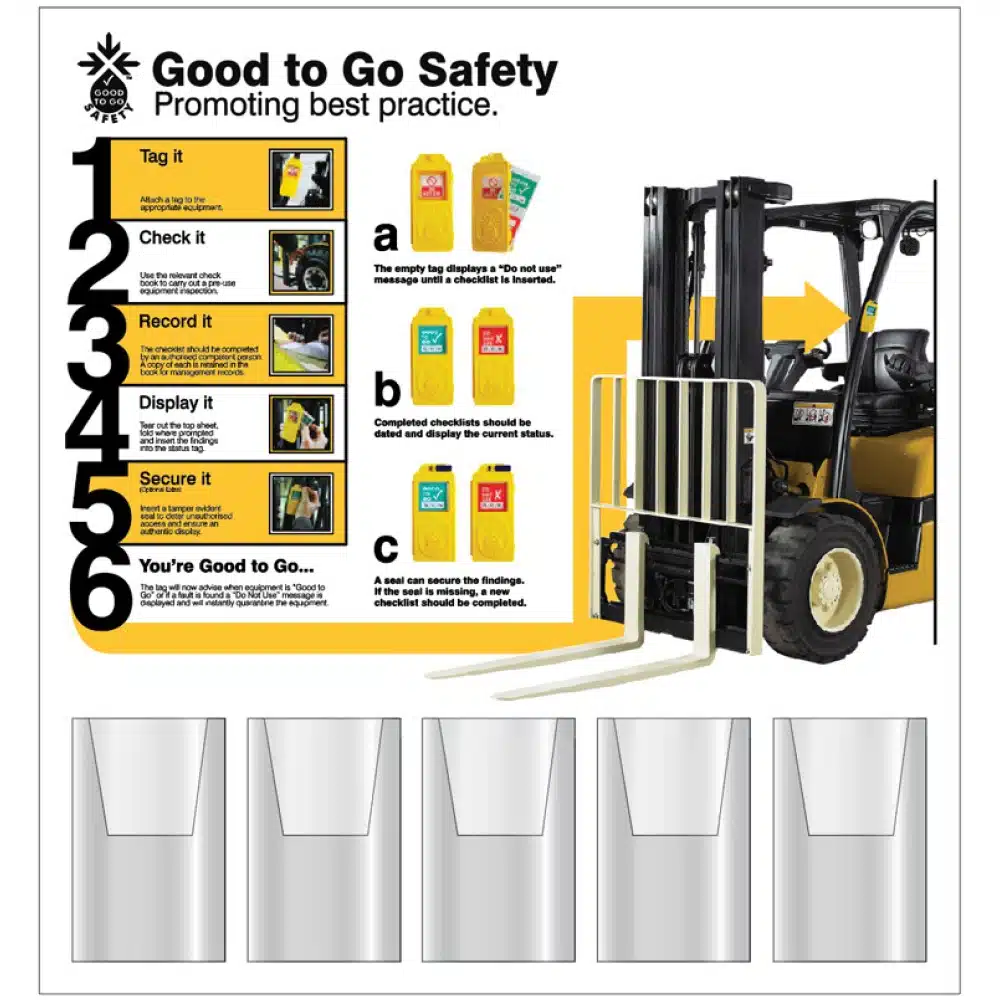
Inspection Information Station
£216.16 Ex. VATEstimated Lead Time: 1 – 2 Working Days
Add to basket -
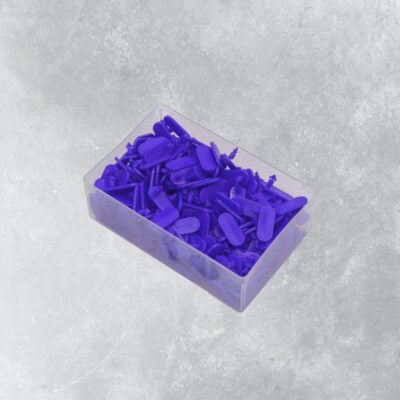
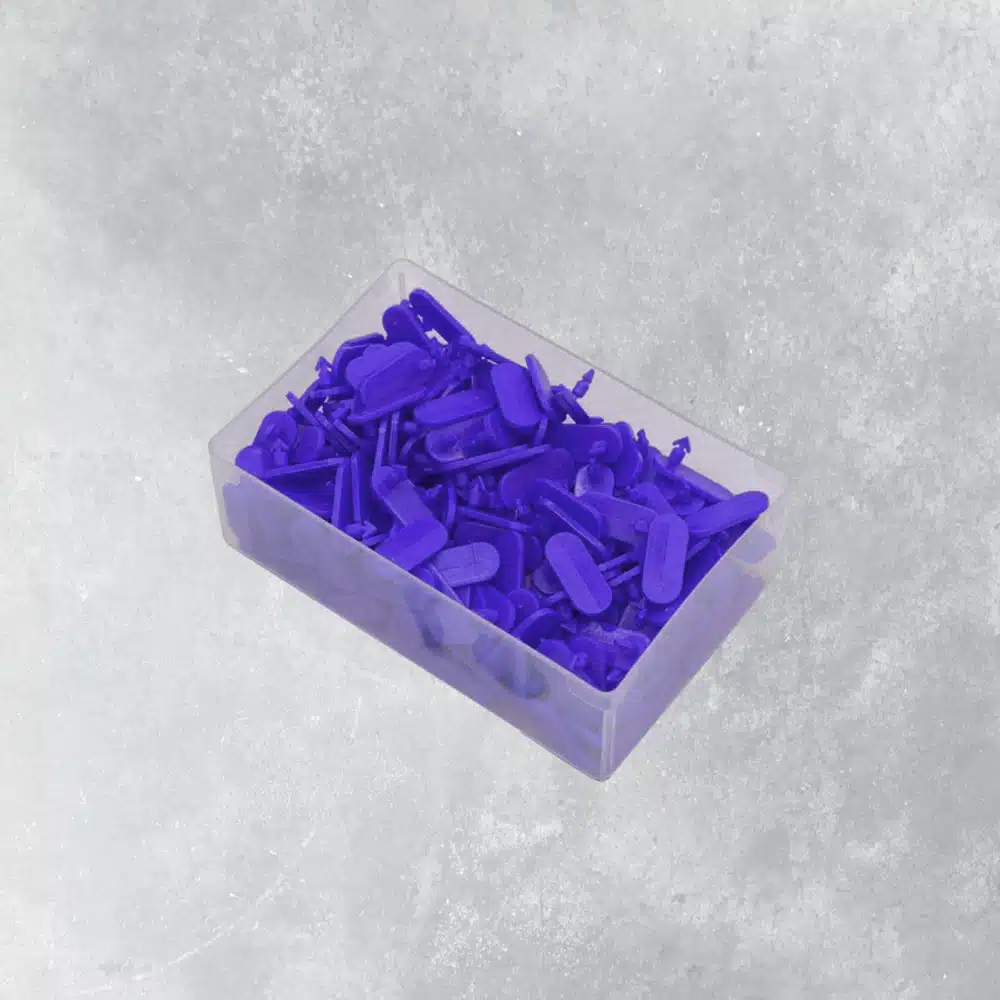
Anti-Tamper Seals (Pack of 100)
£13.31 Ex. VATEstimated Lead Time: 1 – 2 Working Days
Add to basket -
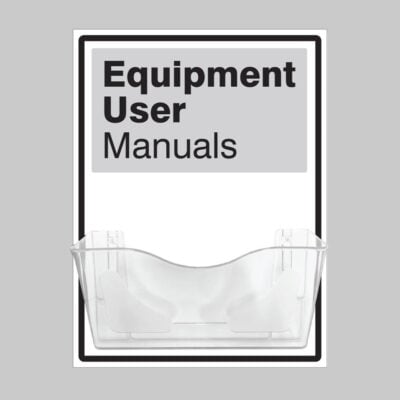
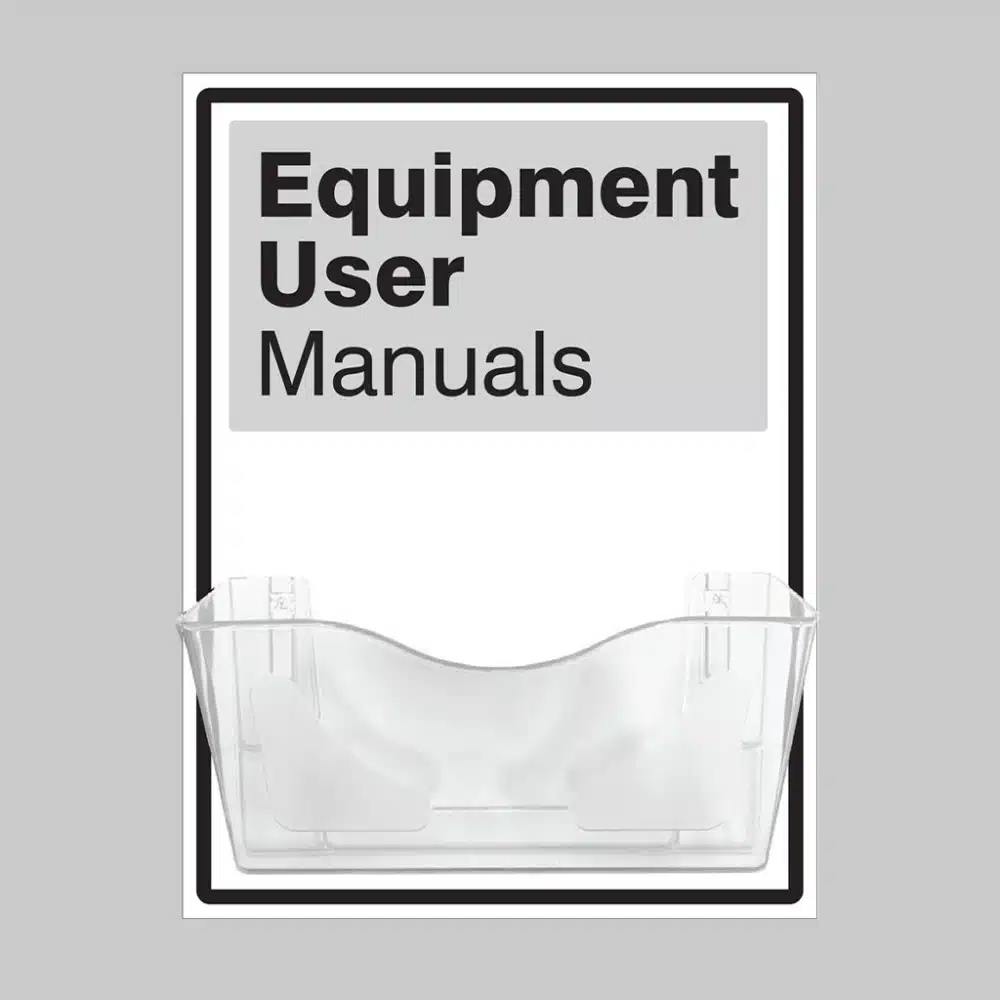
Equipment User Manuals – Document Holder
£57.37 Ex. VATEstimated Lead Time: 1 – 2 Working Days
Add to basket

What telehandler inspections are required?
A telescopic handler is lifting equipment. LOLER and PUWER both apply.
The operator check happens at the start of every shift, against the manufacturer’s handbook. Defects that affect travel or lifting take the machine out of service until they are put right.
A thorough examination is a different job. A competent person examines the telehandler at least every 12 months if it lifts goods only, or at least every six months if it is used to lift people — a work platform on the carriage changes the interval for the whole combination. Lifting accessories and attachments (jibs, hooks, some forks and cages) sit on a six-month default of their own. After major damage or alteration, the machine needs examining again before it goes back to work.
These products record the site check. They are not a Report of Thorough Examination and they do not make an incompatible attachment legal.
What should a telehandler pre-use check cover?
Do the walk-round before the boom leaves the rest. Reach and height change the risk; the check has to include the attachment that is actually fitted.
The Telehandler Inspection Books are written for that pre-use routine. The product listing covers:
- Boom structure, carriage plate, fork arms and quick-hitch mechanisms
- Hydraulic hoses, steering cylinders, stabilisers and tyres
- Fluids, battery, load moment indicator, brakes and visibility aids
Confirm the hitch is locked, the LMI is alive and the load chart matches the attachment. A bucket, skip or crane jib is a different machine until it has been checked. If the boom weeps, a pad is missing or the indicator is in alarm, the tag stays on do not use.
A personnel platform is not a set of forks. Use the forklift work platform products for the cage and treat the lift as people-lifting.
How the Good to Go inspection system works
The tag sits at the cab entry, where the next driver puts a hand on the door.
- Complete the telehandler checklist at the start of the shift.
- Put the top copy in the status tag so the machine shows as good to go or do not use.
- Leave the carbon copy in the book as the plant record.
- Seal the tag so yesterday’s sheet cannot cover this morning’s hitch fault.
- After an attachment change, a knock or work on the boom, complete a new sheet before the next lift.
Daily kits match a start-of-shift record. Weekly kits suit a recorded weekly inspection where a supervisor has set that interval. Neither kit is the 12-month or six-month thorough examination.
Holders and the inspection station keep books in the cab or the plant office so the pad is not living under a seat.
Choose the right telehandler inspection products
The printed item for this machine is the inspection book. The rest is shared Good to Go hardware.
- Telehandler Inspection Books – 25 Checklists — carbon-copy pre-use sheets for telescopic handlers.
- Create Your Own Inspection Books – 25 Checklists — blank books if a house form or an unusual attachment set is not covered.
- Equipment Inspections – Daily Checklist Kits — select the telehandler option. Checklists, tags, seals, wallet and pen.
- Equipment Inspections – Weekly Checklist Kits — telehandler option for a weekly recorded inspection.
- Good To Go Safety Status Tag and Anti-Tamper Seals (Pack of 100) — fit at the cab entry.
- Weather Resistant Inspection Holder, Check Book Wallet & Pen and Equipment Inspection Book Dispenser — keep the current book with the machine.
- Inspection Information Station and Equipment User Manuals – Document Holder — wall storage for books, load charts and the last examination report.
A counterbalance forklift, loading shovel or excavator has its own book. A work platform on the forks belongs with the forklift work platform range.
Who these products are for
They are for people who run a boom, not a mast:
- Telehandler operators on construction, agriculture, warehousing and yard work
- Plant supervisors collecting books at shift change
- Hire desks issuing a telehandler with a consistent check method
- Farm and estate teams with a single handler
- Safety managers keeping pre-use records between thorough examinations
If the same fleet also runs forklifts or front loaders, keep each type on its own Good to Go book.
Telehandler inspection FAQs
How often does a telehandler need a LOLER thorough examination?
At least every 12 months if it lifts goods only. At least every six months if it lifts people, or as set in an examination scheme. Attachments are normally six months.
Is the daily book that examination?
No. The book records the operator check. The thorough examination is done by a competent person and produces a formal report.
Does fitting a work platform change the rules?
Yes. The combination is then used to lift people. Check the platform on the work-platform book and treat the examination interval as six months unless a scheme says otherwise.
When should the checklist be completed?
At the start of each shift, and when the attachment changes.
Where should the status tag go?
At the cab entry, where the next operator will see it before they start the engine.
Can I use the forklift or front loader book on a telehandler?
No. The telescopic boom, LMI and hitch are part of this check.
Free UK mainland delivery on orders over £50. Trade discounts and bespoke options are available for fleet packs or a different checklist layout.