
-
Equipment Inspections – Daily Checklist Kits
£115.07 Ex. VAT Select options This product has multiple variants. The options may be chosen on the product page -
Equipment Inspections – Weekly Checklist Kits
£36.84 Ex. VAT Select options This product has multiple variants. The options may be chosen on the product page



What fixed scaffolding inspections are required?
HSE is plain: a scaffold used for construction should be inspected before it is first used, then every seven days until it comes down, and again after conditions that can cause deterioration — high winds, heavy rain or snow, vehicle strike — or after a substantial alteration.
That duty sits in the Work at Height Regulations 2005. The inspection must be done by a competent person whose knowledge and experience match the type and complexity of the scaffold. A CISRS cardholder is the usual route on complex work; a site manager who has completed suitable scaffold inspection training may inspect a basic structure. Competence is about the scaffold in front of them, not the job title.
The written record matters as much as the walk-round. A tag on the standard is useful for the next trade on site. It does not, on its own, meet the requirement for an inspection report. Keep the duplicate in the book on site until the work is finished.
PUWER still applies to the equipment as work equipment. CDM places duties on the principal contractor to see that the scaffold is inspected. These products support that recorded process. They are not a design check, a TG20 compliance certificate, or a substitute for a scaffolder handing over a newly erected structure.
What should a fixed scaffolding pre-use check cover?
The statutory inspection is not the same as a user looking at the boarded lift before they step on. Both have a place.
The Scaffolding (Fixed) Inspection Books walk a competent person through the structure. The product listing covers footings, standards, ledgers, transoms, bracing and boards. In the field that usually means confirming:
- Bases and sole boards are bearing, not sinking or undermined
- Standards are upright, braced and tied in as the design requires
- Ledgers, transoms and bracing are complete, with fittings tight
- Platforms are fully boarded, with no split or missing boards
- Guardrails, toe boards and ladder or stair access are in place
- Ties, anchors and any loading or sheeting have not been altered since the last inspection
Do the same check again after a storm or after someone has added a lift, removed a tie or cut a hop-up. If the scaffold is not safe to use, the tag must say so and access must be blocked until it is put right.
Users still need a brief look before they go on — missing boards, removed rails, debris on the lift. That user check does not replace the competent person’s seven-day inspection.
How the Good to Go inspection system works
The system is built around one rule: the person approaching the scaffold can see the last result before they climb.
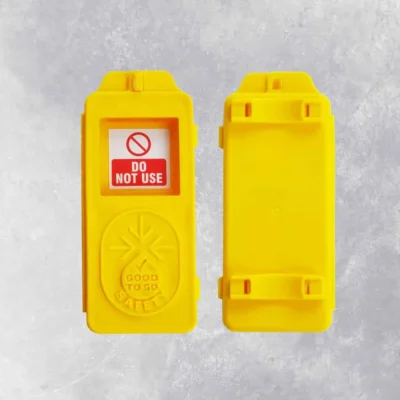
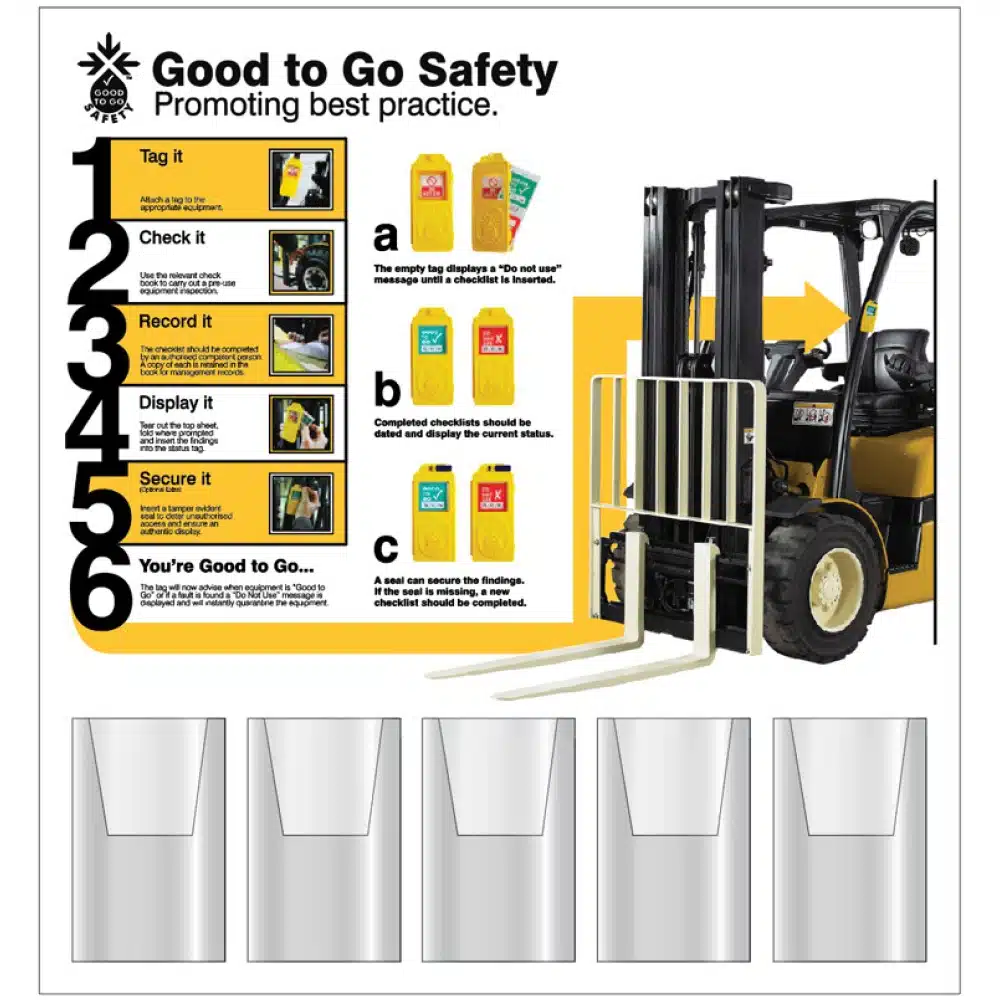
- Fit the status tag at the point of entry, flush to the tube so it is visible and less likely to snag.
- The competent person completes the fixed scaffolding checklist.
- The top copy sits with the tag and shows the date and whether the scaffold is good to go or must not be used.
- The carbon copy stays in the book as the site record.
- An anti-tamper seal holds the tag closed so the status cannot be swapped without it showing.
Weekly kits follow the seven-day statutory cycle. Daily kits exist for sites that also want a recorded check each working day. After weather or an alteration, complete a new sheet and change the tag — do not leave last week’s date on the standard.
Holders, wallets and dispensers keep books readable when the scaffold is wet and the compound is muddy.
Choose the right fixed scaffolding inspection products
The printed scaffold items on this page are the book and the poster. Everything else is shared Good to Go hardware.
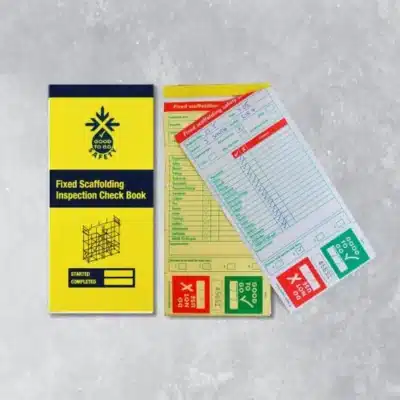
- Scaffolding (Fixed) Inspection Books – 25 Checklists — the book written for fixed structures. Carbon-copy sheets for handover, seven-day and post-weather inspections.
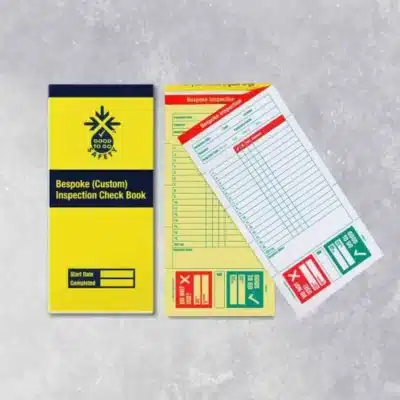
- Create Your Own Inspection Books – 25 Checklists — use only where a house format or an unusual structure is not covered by the printed scaffold book.
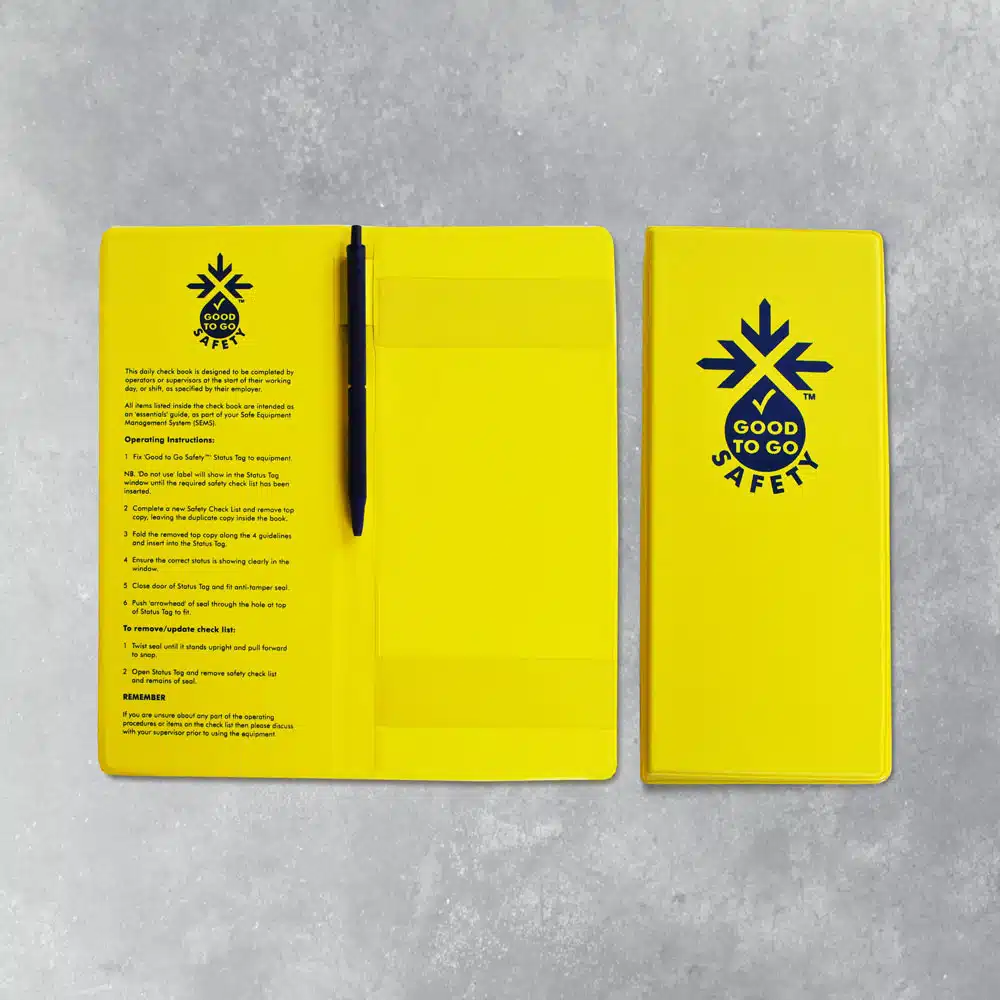
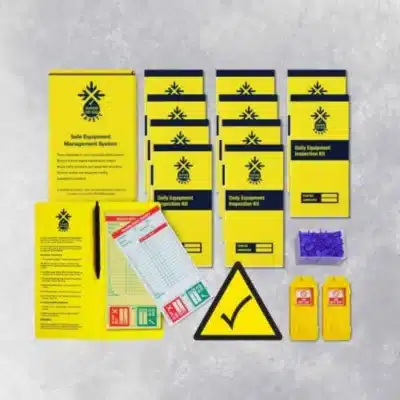
- Equipment Inspections – Weekly Checklist Kits — choose the fixed scaffolding option. Built around a year of weekly recorded inspections, with tag, seals, wallet and pen.
- Equipment Inspections – Daily Checklist Kits — the same system if the contract also requires a daily recorded check. It does not replace the seven-day competent-person inspection.
- Good To Go Safety Status Tag and Anti-Tamper Seals (Pack of 100) — fit at the access point; replace seals as they are used.
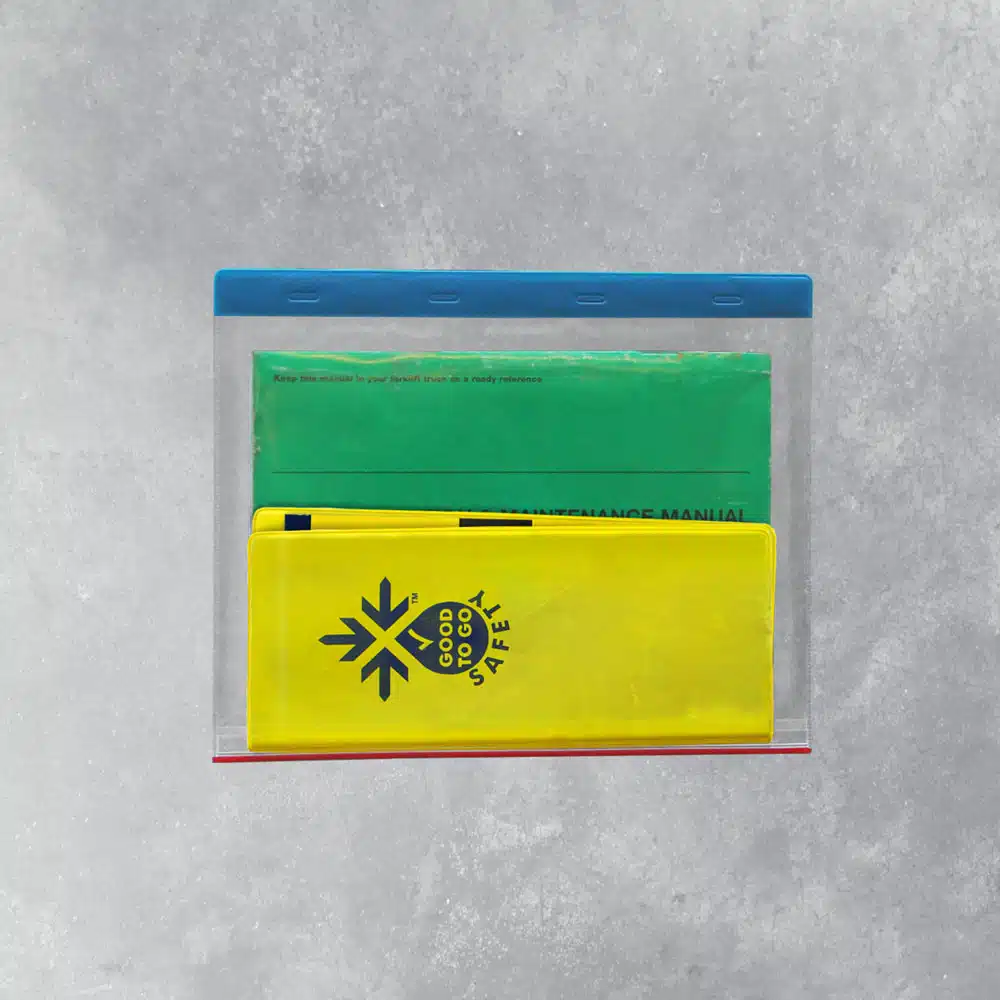
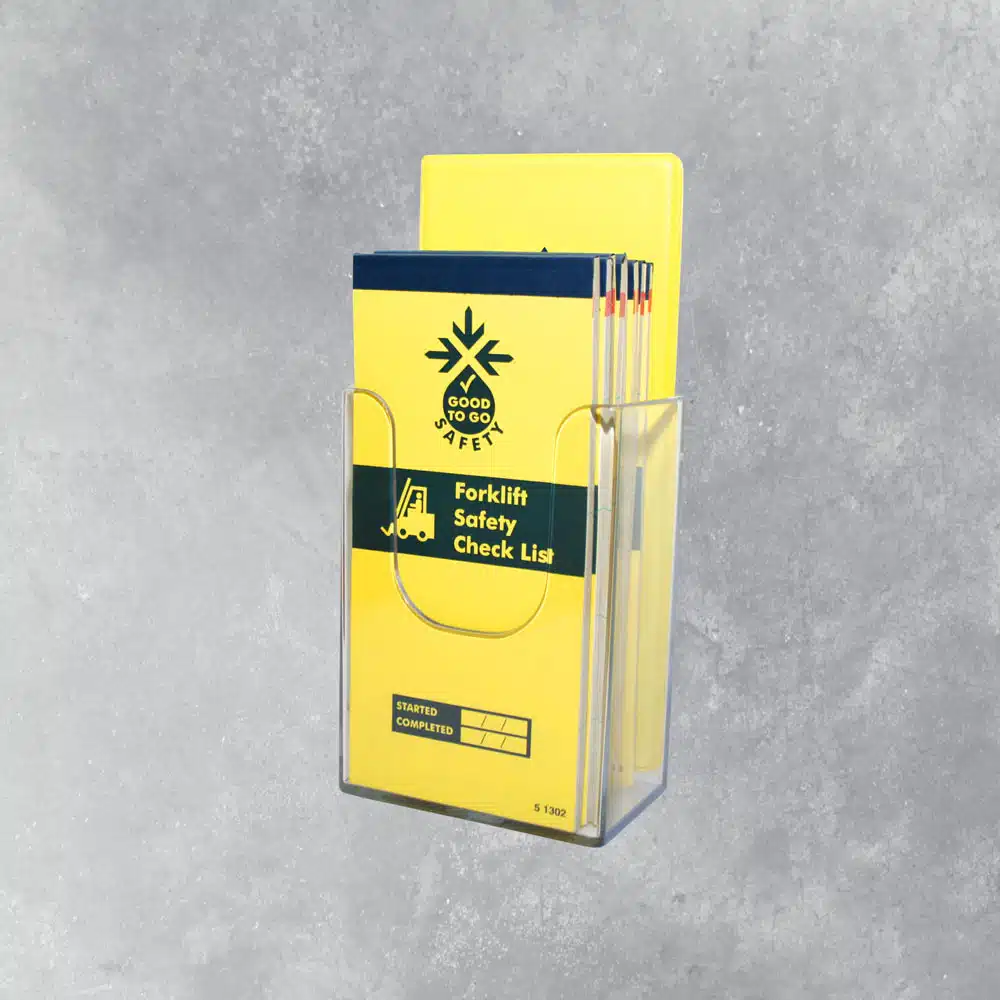
- Weather Resistant Inspection Holder, Check Book Wallet & Pen and Equipment Inspection Book Dispenser — keep the current book with the scaffold or in the site office.
- Inspection Information Station and Equipment User Manuals – Document Holder — central storage on larger sites with several scaffolds.
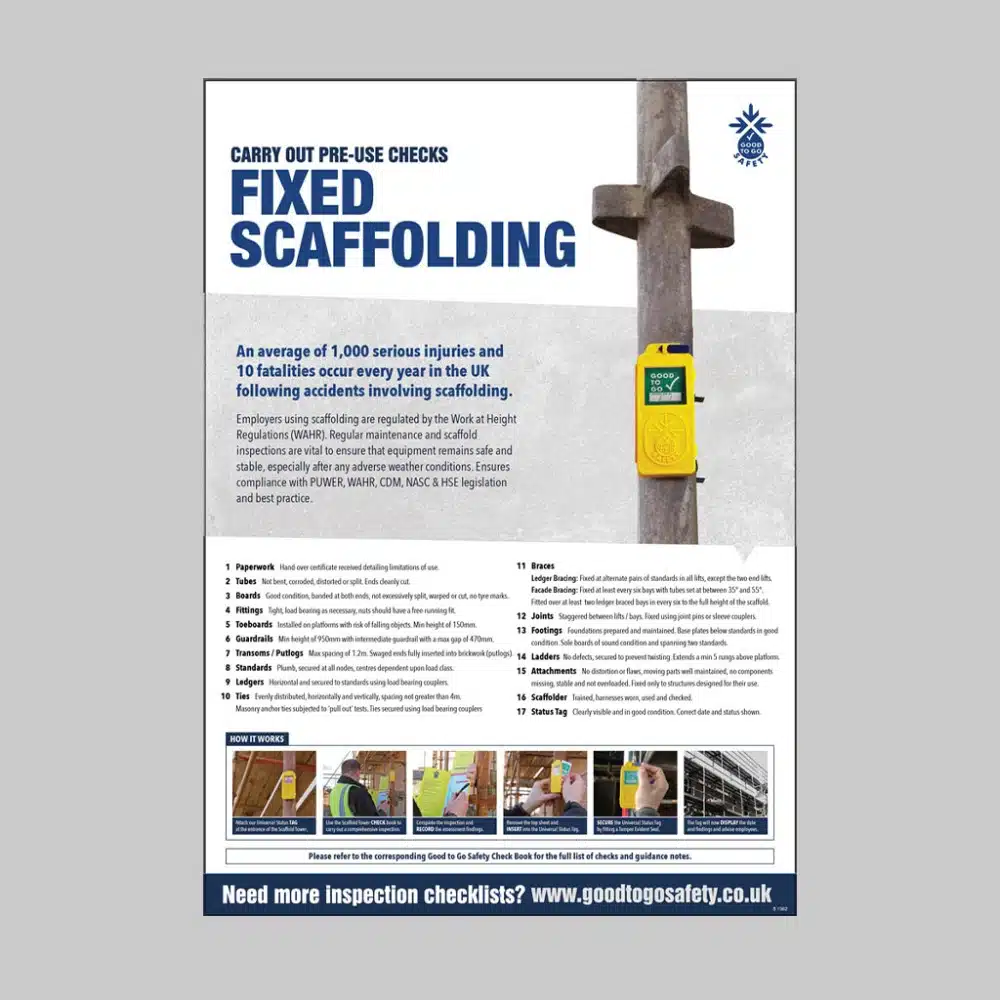
- Scaffolding Inspection – A2 Safety Poster — wipe-clean visual reminder of the inspection points, for the compound or canteen.
Do not use this book for mobile towers. Tower scaffolds have their own subcategory and a different checklist.
Who these products are for
They are for the people who have to produce the record when someone asks for last Wednesday’s inspection:
- Scaffolding contractors handing over and returning to inspect
- Site managers and supervisors trained to inspect a basic scaffold
- Principal contractors keeping WAHR and CDM evidence on the job
- Facilities and maintenance teams with fixed access scaffolds on a building or plant
- Roofing, façade and civils contractors working from tube-and-fitting or system scaffolds
If the site also uses towers, ladders or MEWPs, keep those on their own Good to Go books so the checklist matches the equipment.
Fixed scaffolding inspection FAQs
How often must fixed scaffolding be inspected?
Before first use, then at intervals of no more than seven days, and after weather, impact or any substantial change to the structure. HSE uses that wording for construction scaffolds.
Who is allowed to carry out the inspection?
A competent person. That is someone with the knowledge, training and experience for that scaffold — often a CISRS cardholder, or a site manager who has completed suitable inspection training on a basic structure.
Does a status tag meet the legal record requirement?
No. The tag tells users the result. The written checklist — kept as the carbon copy in the book — is the record you show an inspector.
When should I use the daily kit instead of the weekly kit?
Use the weekly kit for the statutory seven-day cycle. Use the daily kit only if you also want a recorded check every working day. Many sites do a user look each morning and a formal inspection every seven days.
What if the scaffold is altered or a storm hits mid-week?
Inspect again before anyone uses it. Complete a new sheet and update the tag. Do not wait for the next seven-day date.
Can I use these books on a scaffold tower?
No. Use the scaffold tower inspection products for mobile towers. This range is for fixed scaffolding.
Free UK mainland delivery on orders over £50. Trade discounts and bespoke options are available if you need a different checklist layout or larger site packs.