
-
Equipment Inspections – Daily Checklist Kits
£115.07 Ex. VAT Select options This product has multiple variants. The options may be chosen on the product page -
Equipment Inspections – Weekly Checklist Kits
£36.84 Ex. VAT Select options This product has multiple variants. The options may be chosen on the product page








What excavator inspections are required?
Every excavator used at work is work equipment under the Provision and Use of Work Equipment Regulations 1998 (PUWER). That means it must be suitable for the job, maintained in an efficient state and inspected where deterioration could create danger. In practice that is a short operator check before use, plus further inspection and servicing at intervals set by risk assessment, the manufacturer and a competent person.
LOLER sits alongside PUWER only when the machine is used for lifting operations — for example a suspended load on a sling, lifting eye or quick hitch. A machine used solely for conventional earthmoving is not subject to a LOLER thorough examination, but it still needs a PUWER inspection and maintenance regime. Where lifting does take place, the default thorough examination interval is at least every 12 months unless a written examination scheme says otherwise. Devices required for lifting, such as check valves and an audible warning, are a separate control and are not a substitute for recorded daily checks.
These products support the recorded pre-use and periodic checks. They do not replace a LOLER thorough examination by a competent person.
What should an excavator pre-use check cover?
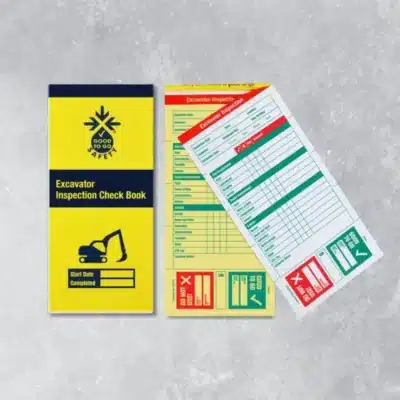
A useful check is a walk-round plus a short function test before the machine works. The Excavator Inspection Books are written for that routine and, on the product listing, cover hydraulics, tracks, cab and attachments. On site that typically means looking for leaks, damage and missing parts, then confirming the machine responds as expected.
Operators should pay particular attention to:
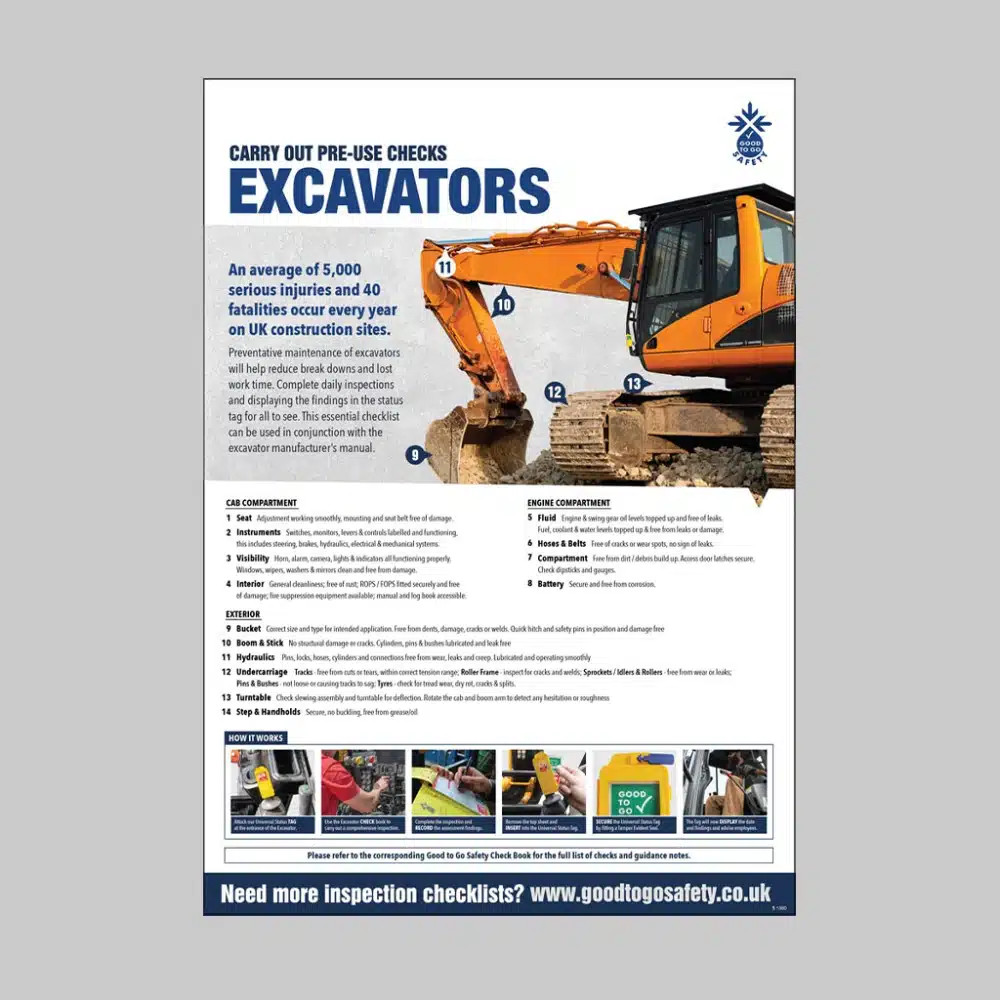
- Undercarriage or running gear, tracks or tyres, and obvious structural damage
- Boom, arm, bucket or other attachment, pins, quick hitch and locking devices
- Hydraulic hoses, rams and signs of leak or chafing
- Cab access, controls, seat, mirrors and other visibility aids
- Lights, horn, reversing alarm and other warning devices
- ROPS/FOPS condition where fitted, and any safety interlocks
If a defect could affect safe use, the machine stays out of service until it is rectified. The carbon copy in the book is the site record; the status tag on the machine is what the next person sees.
How the Good to Go inspection system works
The system is deliberately simple so it is used at the start of a shift rather than filled in later.
- The operator works through the excavator checklist in the book.
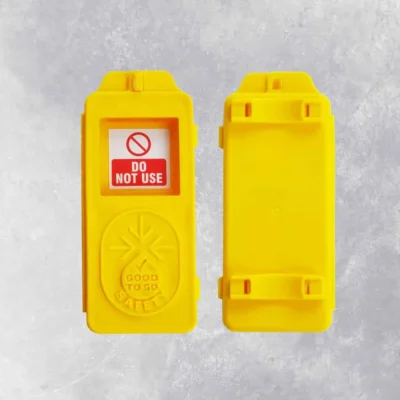
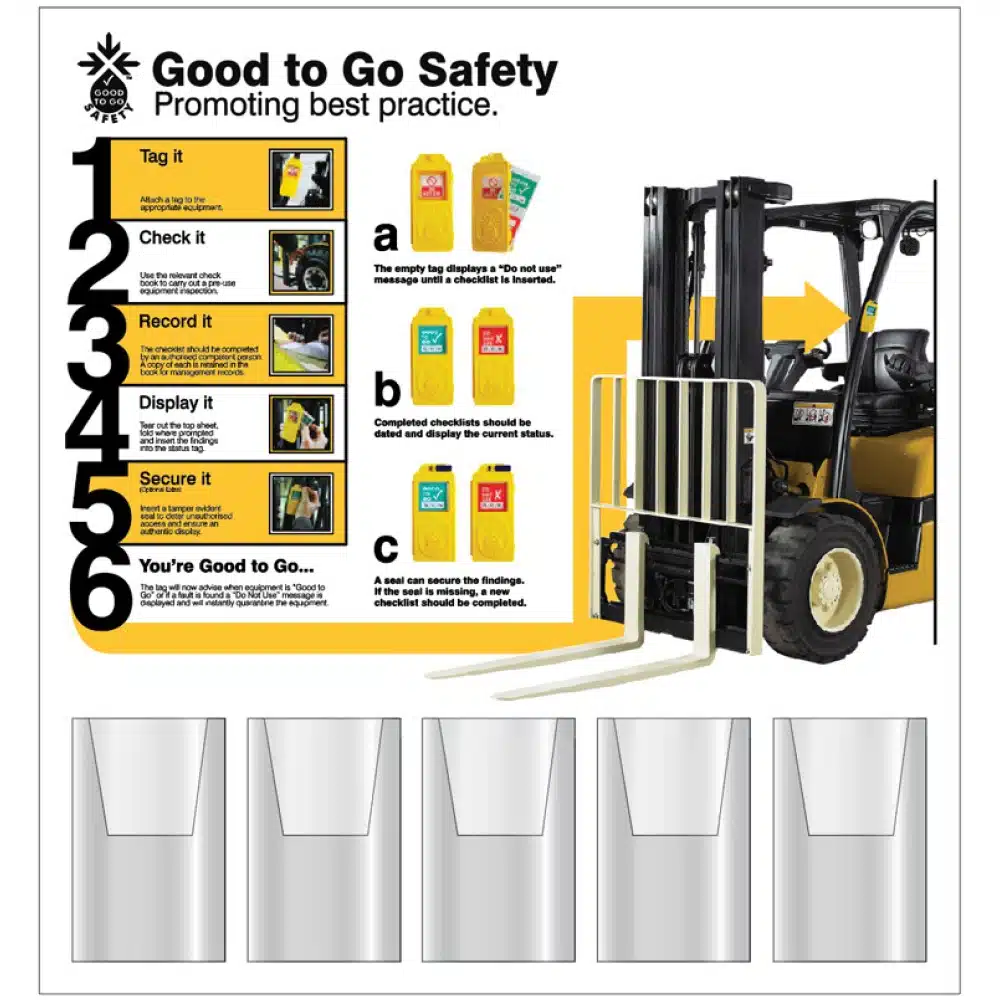
- The top copy is completed and used with the status tag so the machine shows as safe to use or do not use.
- A duplicate stays in the book as the management record.
- An anti-tamper seal secures the tag so the status cannot be changed without it being obvious.
- A weather-resistant holder, wallet or dispenser keeps the book usable in wet and dirty plant conditions.
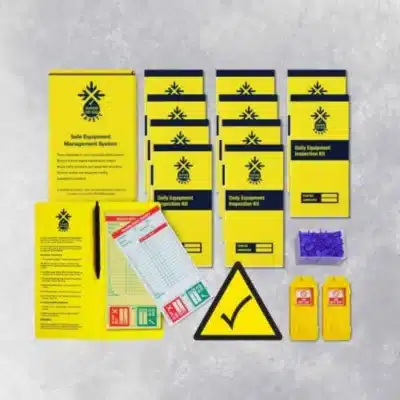
Daily kits are built around a year of weekday checks. Weekly kits cover a 12-month weekly programme. Both use the same tag-and-seal method, so the visual rule is the same across a mixed plant fleet.
Choose the right excavator inspection products
Start with the checklist, then add the hardware that keeps it on the machine.
- Excavator Inspection Books – 25 Checklists — the dedicated book for this category. Pocket format with carbon-copy sheets for daily or weekly use.
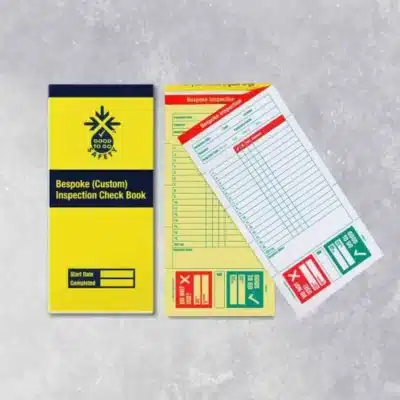
- Create Your Own Inspection Books – 25 Checklists — blank books where the printed excavator list does not match a modified machine or a house checklist.
- Equipment Inspections – Daily Checklist Kits — select the excavator option. Includes checklists, status tags, tamper-evident seals, wallet and pen for a high-frequency regime.
- Equipment Inspections – Weekly Checklist Kits — excavator option with checklists, one status tag, seals, wallet and pen for a weekly recorded inspection.
- Good To Go Safety Status Tag and Anti-Tamper Seals (Pack of 100) — replacements when tags are damaged or seals are used up.
- Weather Resistant Inspection Holder, Check Book Wallet & Pen, and Equipment Inspection Book Dispenser — keep books dry and in one place in the cab or plant office.
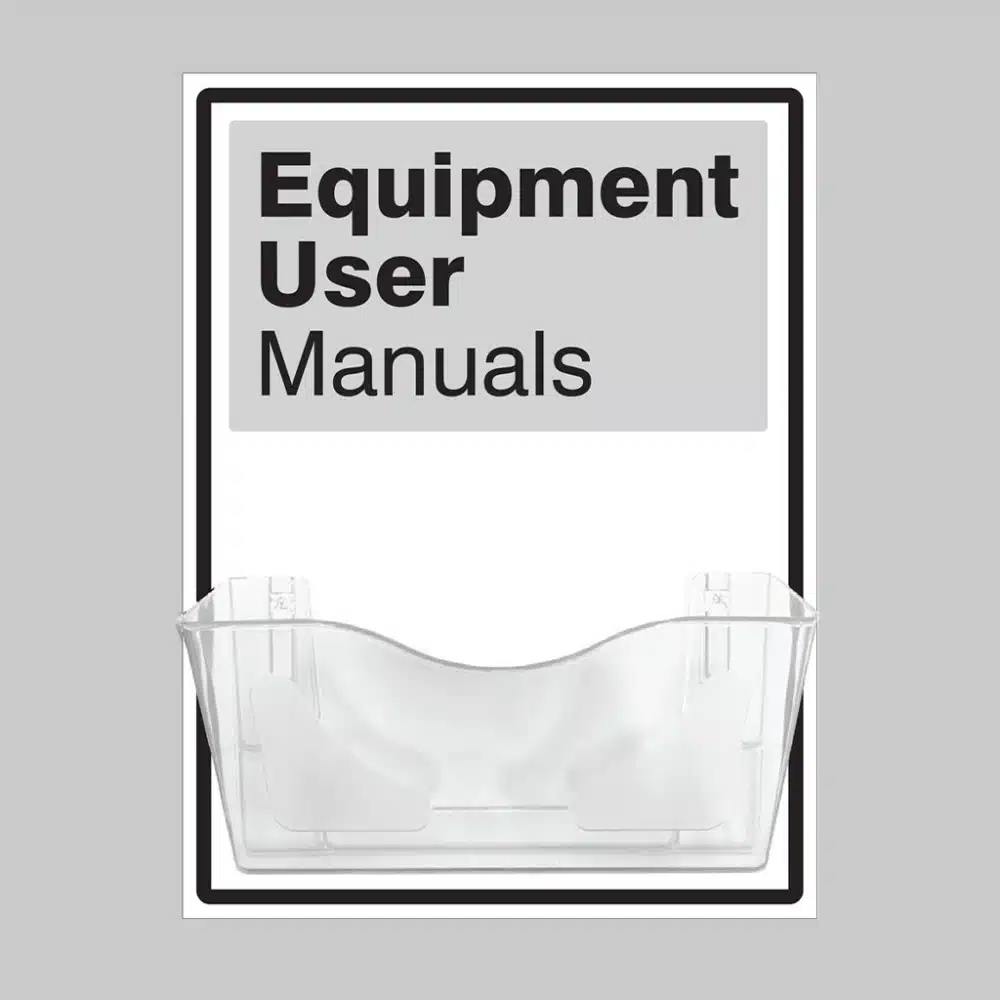
- Inspection Information Station and Equipment User Manuals – Document Holder — central storage when several machines or mixed plant share one compound.
- Excavator Inspection – A2 Safety Poster — a fixed visual reminder of the inspection points for operators and supervisors.
Accessories are shared across the Good to Go range. The excavator-specific printed items on this page are the inspection book and the A2 poster.
Who these products are for
They are aimed at people who have to prove the check happened, not only that a policy exists:
- Plant operators completing a pre-use check before tracking or slewing
- Site supervisors and plant managers reviewing books after a shift
- Construction, demolition, utilities and civils contractors running 360 and mini excavators
- Plant hire desks that need a consistent check method for machines going on and off hire
- Facilities and estates teams with a small number of machines in yards or compounds
If the same site also runs dumpers, telehandlers or front loaders, use the matching equipment book rather than forcing every machine onto a generic sheet. The status tag and seals stay the same.
Excavator inspection FAQs
Do all excavators need a LOLER thorough examination?
No. LOLER applies when the excavator is used for lifting operations. Earthmoving-only use remains under PUWER, which still requires inspection and maintenance.
Is a pre-use check a legal requirement?
PUWER requires work equipment to be maintained in a safe condition and inspected where needed. A recorded operator check before use is the practical way most sites meet that duty for plant.
How often should the book be completed?
Use the daily kit where the machine works most days. Use the weekly kit where a competent person has set a weekly recorded inspection. Follow the manufacturer’s maintenance intervals in addition to these checks.
What happens if the operator finds a fault?
Mark the machine do not use, secure the tag with a seal, and keep it out of service until the defect is put right. Do not rely on a verbal handover.
Are the daily and weekly kits excavator-specific?
Yes, both kits are sold with an equipment-type option. Choose excavator so the checklists match this machine, not a forklift or scaffold book.
Will these products replace a manufacturer service or a competent person’s examination?
No. They record the site checks. Servicing, repair and any LOLER thorough examination still have to be done by the right people at the right interval.
Free UK mainland delivery on orders over £50. Trade discounts and bespoke options are available if you need a different checklist layout or a larger fleet pack.