
As we navigate through 2026, the UK’s regulatory landscape for safety and security is undergoing its most significant evolution in decades. Traditionally, Health and Safety (HSE) focuses have remained squarely on accidental hazards like slips, trips, falls, and machinery safety. However, the Terrorism (Protection of Premises) Act 2025, universally known as Martyn’s Law, has introduced a mandatory shift toward security preparedness for almost every type of business and public-facing institution in the UK.
Named in memory of Martyn Hett, one of the 22 victims of the 2017 Manchester Arena attack, this legislation received Royal Assent on 3 April 2025. We are currently in the 24-month implementation phase, with formal enforcement by the Security Industry Authority (SIA) scheduled to begin in Spring 2027. Whether you manage a high-throughput warehouse, a primary school, a retail unit, or a place of worship, the coming year is your critical window to integrate these requirements into your existing safety protocols.
Does Your Premises Fall in Scope?
Martyn’s Law is not reserved solely for high-profile entertainment venues. The Act applies to any “qualifying premises” that meet specific statutory criteria. For a premises to be in scope, it must be “wholly or mainly” used for a purpose listed in Schedule 1 of the Act—which includes retail, education, food and drink, and industrial spaces accessible to visitors—and it must be accessible to the public, either permanently or occasionally.
Capacity is the deciding metric: if your premises can reasonably be expected to hold 200 or more individuals (including staff, students, and visitors) at any one time, the law applies. For schools, this often includes the total pupil and staff count. For warehouses, it applies if you have a trade counter or host occasional public events.
Schools & Education: Includes nurseries, primary schools, and secondary schools.
Industrial & Warehousing: Includes units with public-facing trade counters or factory outlets.
Retail & Hospitality: Shops, restaurants, and pubs with a capacity over 200.
Places of Worship: Churches, mosques, and temples are specifically included in the legislation.
Public Venues: Community halls, libraries, and sports grounds.
Official Source: Martyn’s Law Factsheet – Home Office

The Two-Tier System: Standard vs. Enhanced Duty
The Act follows a proportionate approach to ensure that the security burden on smaller organisations is kept to a minimum. The Standard Tier generally applies to premises with a capacity of 200 to 799 people, while the Enhanced Tier is for venues with a capacity of 800 or more.
Crucially, the government has provided “Special Considerations” for certain sectors. Schools (early years, primary, and secondary) and Places of Worship will remain in the Standard Tier regardless of their capacity. This means a large secondary school with 1,500 pupils only needs to meet Standard Tier requirements, focusing on low-cost procedural readiness rather than the expensive physical infrastructure often required in the Enhanced Tier.
Standard Tier (200–799): Focuses on low-cost procedural activities like staff training and emergency plans.
Enhanced Tier (800+): Requires a formal Terrorism Risk Assessment and documented physical security measures.
School Exemption: Schools stay in the Standard Tier regardless of size to avoid diverting educational funds.
Notification: Both tiers must notify the SIA that they are a qualifying premises.
Senior Oversight: Enhanced Tier venues must appoint a “Designated Senior Individual” to manage compliance.
Official Source: Terrorism (Protection of Premises) Act 2025: Overarching Factsheet – GOV.UK

Mandatory Public Protection Procedures
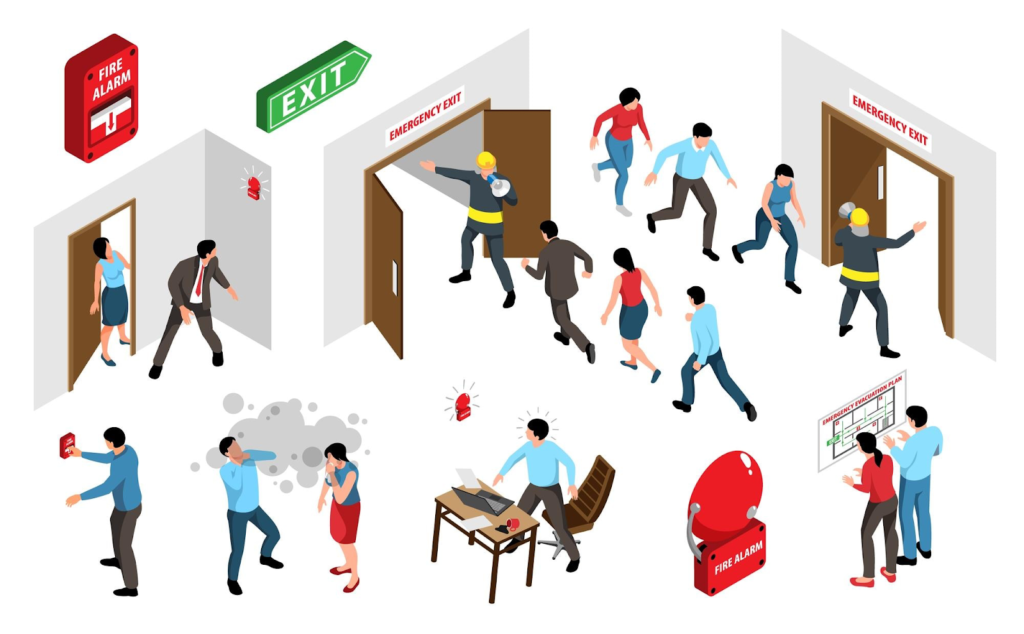
At the heart of Martyn’s Law is the requirement to have “Public Protection Procedures” in place. These must be actionable instructions that staff can follow during a high-stress incident. The government highlights four specific types of procedures: Evacuation, Invacuation, Lockdown, and Communication.
For schools, these procedures must be integrated with existing safeguarding protocols. For warehouses and public venues, it means knowing how to secure massive roller-shutter doors or public entrances as quickly as a standard fire exit. Your procedures must be dynamic, allowing staff to make the safest choice based on whether the threat is inside the building or in the immediate vicinity.
Evacuation: Moving people away from a threat inside the facility to a safe external assembly point.
Invacuation: Moving people to a safe, “hardened” internal area to protect them from an external threat.
Lockdown: The ability to physically secure all entry points to delay an attacker’s progress.
Communication: Reliable methods to alert everyone on-site instantly, such as PA systems or specific alarm tones.
Dynamic Response: Training staff to assess whether to run, hide, or tell based on the specific incident.
Official Source: Evacuation, Invacuation and Lockdown Guidance – NPSA
Staff Training: Action Counters Terrorism (ACT)
Training is perhaps the most critical element of compliance for the Standard Tier. You don’t need to hire expensive consultants to meet this requirement; the UK government provides a wealth of free resources via the ProtectUK portal. The goal is to move beyond simple awareness and foster a “security culture” where every employee, teacher, or volunteer feels empowered to report suspicious activity.
Staff should be encouraged to complete the ACT Awareness e-Learning and SCaN (See, Check and Notify) training. These modules teach workers how to identify “hostile reconnaissance”—where an individual is scoping out your facility—and how to respond to suspicious items. In a school setting, this can be integrated into annual INSET days or safeguarding briefings.
ACT Awareness eLearning: Free, nationally accredited guidance on identifying and responding to threats.
SCaN Training: Focuses on disrupting hostile reconnaissance through vigilance and engagement.
Vigilance Culture: Encouraging staff to trust their instincts and report “out of place” behavior.
Run, Hide, Tell: Ensuring everyone knows the national standard for responding to an active weapons attack.
Toolbox Talks: For industrial sites, integrating security into daily safety briefings.
Official Source: ACT Awareness e-Learning – ProtectUK

Physical Security: Lockers, Cabinets, and Access Control
While physical security infrastructure isn’t strictly mandated for the Standard Tier, the Act requires procedures to be “reasonably practicable.” In many environments—from schools to warehouses—securing items that could be used as weapons or ensuring a “clear floor” policy is a logical step in risk mitigation.
At HSE Store, we supply equipment that directly supports these security goals across all sectors:
Security Cabinets: Essential for schools and warehouses to prevent unauthorized access to tools, chemicals, or equipment that could be dangerous in the wrong hands.
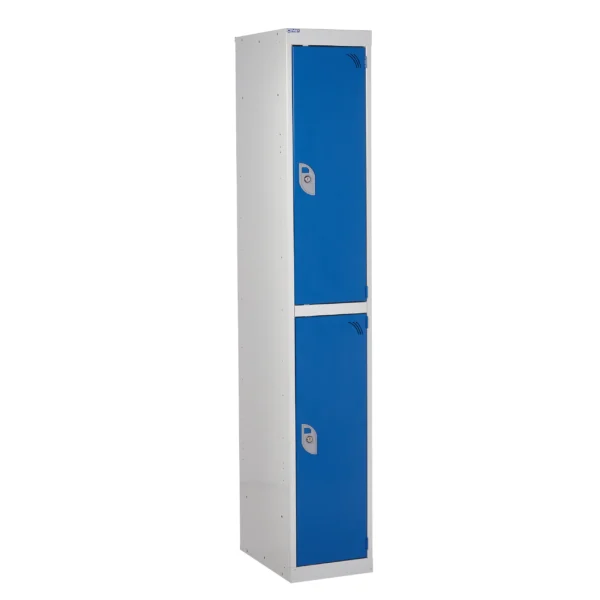
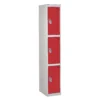
Staff & Student Lockers: Providing adequate storage reduces clutter in public corridors, making it easier for staff to identify suspicious, unattended bags or items.
Access Control: High-quality locks and barriers ensure that “Staff Only” or “Classroom” areas are physically distinct and securable.
PAcT Kits: Publicly Accessible Trauma kits stored in secure, visible locations are highly recommended for schools and venues to treat major injuries before emergency services arrive.
Official Source: Crisis response kit checklist – ProtectUK
-
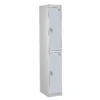
QMP Secure Lockers – 2 Door
From £209.14 Ex. VAT Select options This product has multiple variants. The options may be chosen on the product page- 300
- 380
- 450
- 300
- 380
- 450
-
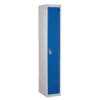
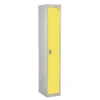
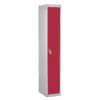
QMP Secure Lockers – 1 Door
From £188.09 Ex. VAT Select options This product has multiple variants. The options may be chosen on the product page- 300
- 380
- 450
- 300
- 380
- 450
-
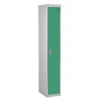
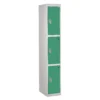
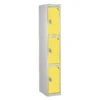
QMP Secure Lockers – 3 Door
From £244.24 Ex. VAT Select options This product has multiple variants. The options may be chosen on the product page- 300
- 380
- 450
- 300
- 380
- 450






The Role of the Regulator and Enforcement
The Security Industry Authority (SIA) has been appointed as the regulator for Martyn’s Law. Their primary role during the current implementation phase is to support and guide businesses toward compliance. However, once the grace period ends in 2027, they will have the power to conduct inspections and issue significant penalties for serious or persistent non-compliance.
For facility managers and headteachers, this means that documentation is just as important as the procedures themselves. You must be able to prove to the SIA that you have notified them of your premises, trained your staff, and regularly reviewed your risk assessments.
Compliance Notices: Formal warnings requiring you to rectify a security gap within a specific timeframe.
Monetary Penalties: Fines of up to £10,000 for Standard Tier and up to £18 million for Enhanced Tier.
Restriction Notices: The power to close a premises or stop an event if the risk is deemed too high.
SIA Inspections: The regulator may visit sites to audit security plans and interview staff on their preparedness.
Advisory First: The SIA has stated it will adopt an “advisory first” approach to help organizations achieve compliance.
Official Source: Regulator – ProtectUK
Conclusion
Martyn’s Law represents a fundamental shift toward a culture of vigilance in the UK. Whether you are managing a warehouse, a school, or a public venue, the next year is a critical window to integrate security into your existing safety protocols. By understanding your tier, training your staff via ProtectUK, and securing your physical premises with the right storage solutions, you are doing more than just “complying”—you are actively protecting lives.
Frequently Asked Questions (FAQ)
When does Martyn’s Law officially become enforceable?
The Act received Royal Assent on 3 April 2025. Following a 24-month implementation period, enforcement is expected to begin in Spring 2027.
Does this apply to small businesses with under 200 capacity?
No. Premises with a capacity of fewer than 200 people are currently out of scope, though all businesses are encouraged to follow the free training.
Does this apply to private warehouses?
If your warehouse is strictly staff-only and never hosts public visitors or events exceeding 200 people, it is currently out of scope.
Why do schools stay in the Standard Tier regardless of size?
The government recognizes that schools already have robust safeguarding and lockdown procedures, and staying in the Standard Tier prevents diverting critical education funds to security infrastructure.
What is the ProtectUK portal?
It is the official government platform (www.protectuk.police.uk) providing free training and risk assessment templates.
How do I calculate my building's capacity?
Use the occupancy figure from your Fire Safety Risk Assessment or floor space factors found in the Building Regulations.
What is "Invacuation"?
Moving people to a safe, protected area inside your building to protect them from an external threat nearby.
Do I need to hire a security consultant?
No. The government intends for Standard Tier businesses to comply using free tools and their own staff knowledge.
Can I be fined if an attack occurs at my site?
No. Fines are only issued for failing to meet the procedural requirements, such as failing to have a safety plan or failing to train staff.
Do I need a special first aid kit?
While not mandatory, the government recommends Publicly Accessible Trauma (PAcT) kits for premises in scope.
What is a "senior individual"?
For Enhanced Tier organisations, a senior individual (usually a Director) must be designated to ensure the body complies with the Act.
How often should we run drills?
Best practice suggests rehearsing your security procedures at least annually.
Is the SIA the same as the police?
No. The SIA is a regulator under the Home Office. However, they work closely with Counter-Terrorism Policing.
Does Martyn’s Law apply to car parks?
The Act applies to the “premises,” which can include land such as car parks if they are part of the area where the public has access.
Can I use my fire alarm for a terrorist incident?
Generally, no. Standard fire alarms encourage people to run outside, which may lead them into greater danger if the threat is outside. Coded announcements or specific alarm tones are preferred.